community
A World Youth Report Response from the World Happiness Foundation
Executive Summary I welcome the United Nations World Youth Report as a timely, youth-informed call to treat youth mental health not as an “individual problem to fix,” but as an outcome of the environments we build—schools, labor markets, families, digital spaces, and communities. The report’s core c
February 11, 2026·Luis Miguel Gallardo·11 min read
AI insights
Executive Summary
I welcome the United Nations World Youth Report as a timely, youth-informed call to treat youth mental health not as an “individual problem to fix,” but as an outcome of the environments we build—schools, labor markets, families, digital spaces, and communities. The report’s core contribution is its social determinants framing: youth mental health and well-being are shaped by interlinked conditions—education, employment, family dynamics, poverty and deprivation, technology and the online environment, and societal attitudes—so solutions must be inclusive, multisectoral, and designed with young people.
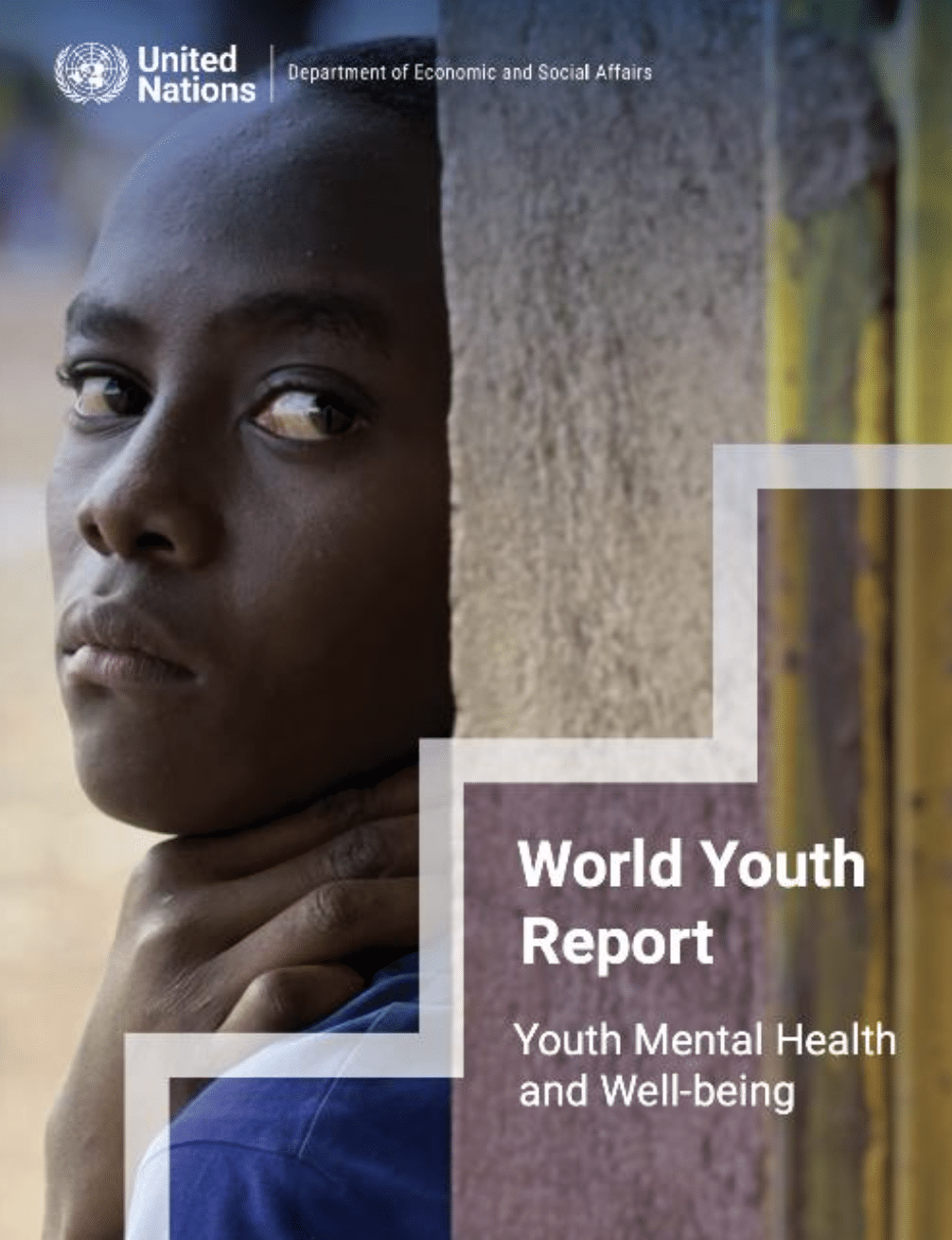
Full-World-Youth-Report-2025DownloadFrom the perspective of the World Happiness Foundation, this framing strongly aligns with our mission and programs: we advocate for happiness and well-being as public priorities (including happiness curricula), capacity building, and local “ecosystems of happiness” that embed well-being into governance and daily life.
Where I believe we can add distinctive value is in three areas that complement (rather than substitute) the UN emphasis on structural determinants: (1) making an abundance mindset an explicit, evidence-informed lever for youth flourishing; (2) moving the prevention window earlier—especially experiences before age 10 that shape life-course mental health and behavior; and (3) using our concept of Fundamental Peace—freedom, consciousness, and happiness—as a coherent bridge between policy, mental health promotion, and youth agency.
What the UN World Youth Report prioritizes for youth mental health and development
The World Youth Report is a flagship publication produced under the UN youth architecture, aimed at identifying priority youth development issues across regions. Its 2025/2026 edition on Youth Mental Health and Well-being adopts a youth-informed social determinants approach, emphasizing that mental health is shaped by “the world young people live in.”
A few findings and priorities are especially important for mental health, education, employment, and civic engagement:
First, the report anchors itself in a continuum view of mental health and aligns with widely used definitions of mental health as a state of well-being that supports coping, learning, working, and community contribution. This connects directly to global public health data: the World Health Organization estimates that one in seven 10–19-year-olds experiences a mental disorder, with depression and anxiety among leading causes of illness and disability in adolescence.
Second, it underscores why youth mental health cannot be postponed. Large-scale epidemiology shows that onset of many mental disorders is concentrated early in life—about one-third before 14 and nearly half before 18 across disorders—supporting prevention and early intervention. The report explicitly advocates prevention, early intervention, and inclusive policies that mitigate disparities and stigma, noting that discrimination and unequal access to opportunities compound risk.
Third, the report translates the six determinants into policy-relevant priorities. In education, it emphasizes supportive school environments and social-emotional learning, and recommends adequately funding school-based mental wellness initiatives. In employment, it highlights stress, job insecurity, gender disparities, and difficult transitions from education to work—advocating fair remuneration, workplace inclusivity, and smoother pathways into decent work. In family contexts, it elevates parental support programs and open communication, as well as addressing family stressors and trauma. In poverty and deprivation, it calls for addressing economic inequality, building protective factors (including against suicide), and targeting support to marginalized youth. In digital environments, it recommends digital literacy and partnerships that ensure equitable access to quality education. In society and community, it treats stigma as a core barrier and recommends normalization and visibility—bringing entire communities, not only youth, into the conversation.
Fourth, youth participation is not ornamental in this report—it is methodological. The report integrates consultations facilitated with thousands of young people across many countries, plus qualitative lived-experience narratives, and it argues that youth insights improve the relevance and effectiveness of policy. This is where civic engagement becomes part of mental health: belonging, voice, psychological safety, and social connection can be protective, while exclusion and stigma can be harmful.
A simple way to visualize the report’s logic is:
Social determinants (education, work, family, poverty, technology, norms) → daily stressors & resources → access to support & opportunity → mental health and well-being → learning, employment, and community participation.
Where the World Happiness Foundation aligns and where gaps remain
The report’s “whole-of-society” emphasis is deeply aligned with the World Happiness Foundation’s strategy. We explicitly prioritize capacity building and advocacy—particularly the inclusion of happiness curricula in education and public systems that redefine progress through well-being. We also work through place-based approaches (such as Cities of Happiness) that frame communities as ecosystems designed to nurture people, empower organizations, and support inclusion and sustainability—conditions that map neatly to a determinants lens.
I also see strong coherence between the UN report’s call for inclusive, youth-informed policy and our emphasis on scaling communities of practice: we describe global ecosystems of happiness as a distributed network for collaborative learning, diffusion of practices, and cross-sector mobilization.
The gaps I observe are less “problems” in the UN report than opportunities for complementary work.
One gap is motivational architecture. The report persuasively explains what must change in systems, but many stakeholders still struggle with the inner posture and cultural narratives needed to sustain change—especially under austerity, political polarization, and stigma. Here is where our abundance mindset framing can be useful as a pragmatic cultural technology—not a slogan, but a trainable set of beliefs and skills that influence behavior, help-seeking, and civic contribution.
Another gap is the prevention window. The report advocates early intervention, but global practice often still under-invests in early childhood and the “first decade” as a mental health strategy. Evidence strongly supports shifting upstream.
Why an abundance mindset belongs in youth mental health policy
In our work, an abundance mindset is the opposite of zero-sum thinking: it is a stance that emphasizes possibilities, collaboration, and inherent human worth rather than chronic threat, deficiency, and competition. In our Happytalism framing, abundance mindset replaces scarcity mindset and orients individuals and institutions toward building shared prosperity and well-being.
To keep this rigorous, I treat abundance mindset as an umbrella that overlaps with well-studied constructs: growth-oriented beliefs about change, hope (agency + pathways), learned optimism, self-efficacy, and the capacity to broaden attention and build coping resources through positive emotion.
The evidence base is strong enough to justify policy experimentation, but nuanced enough to demand humility.
Growth mindset interventions show mixed academic effects and substantial heterogeneity; some high-quality evidence finds small or non-significant achievement impacts. At the same time, a recent meta-analysis reports that effects on mental health outcomes can be meaningful in some contexts, again with wide variability—supporting targeted, well-designed implementation rather than hype.
Hope-oriented interventions are promising because they directly strengthen goal-directed agency and coping. A randomized controlled trial of a hope intervention for adolescents reported reductions in depression and improvements in hope-related outcomes, suggesting scalable potential when delivered by trained paraprofessionals.
In education settings, social and emotional learning is one of the most replicated “mindset-adjacent” approaches. A large meta-analysis of universal school-based SEL programs found improvements in social-emotional skills, behavior, and academic performance. Follow-up meta-analytic evidence indicates benefits can persist months to years later, supporting SEL as a durable prevention platform.
Mechanistically, the broaden-and-build theory helps explain why abundance-like emotions (interest, joy, connection) matter: positive emotions broaden cognition and over time build psychological and social resources that support resilience—an upstream pathway into mental health.
I therefore argue for abundance mindset as both an input to flourishing (it shapes coping, learning, help-seeking, social connection) and an output of flourishing (improved mental health makes expansive thinking more likely). This “virtuous cycle” is not automatic, but it can be designed.
Abundance mindset → agency/hope + broadened coping → help-seeking & relationships → improved mental health → better learning/work/community participation → stronger sense of possibility → deeper abundance mindset.
Why experiences before age 10 matter for adult trajectories
If we want a true upstream youth mental health strategy, the first decade of life must be part of the youth policy conversation, even though “youth” is often defined as 15–24 in UN statistical practice.
Developmental neuroscience and pediatrics show that early experiences and environments shape brain architecture and stress-response systems, with lasting effects on learning, behavior, and health. The ecobiodevelopmental model of “toxic stress” explains how early adversity can become biologically embedded, increasing risk across the life course.
Longitudinal evidence demonstrates that early behavioral capacities predict adult outcomes. In the Dunedin cohort study, childhood self-control predicted adult physical health, substance dependence, personal finances, and criminal offending, even after accounting for IQ and social class.
Adversity also shows durable associations with later mental health. Prospective evidence indicates childhood maltreatment substantially increases risk of adult depression and anxiety. Large cohort work continues to find associations between adverse childhood experiences and adult psychiatric disorders, even after adjusting for familial confounding.
Importantly, early environments include socioeconomic and relational conditions: neuroimaging research links family income gradients to children’s brain structure, with strongest associations among the most disadvantaged children—an example of how poverty and deprivation can become developmental risk.
A compact timeline can clarify why “before 10” is not a side note:
Prenatal–2: stress regulation and attachment pathways are shaped; buffering caregivers matter.
3–5: self-control and emotion regulation become measurable predictors of later life functioning.
6–10: school climate, bullying, and belonging calibrate self-concept and help-seeking norms.
Adolescence: disorder onset risk rises sharply; earlier buffers reduce later burden.
This is not determinism. It is an argument for protective pathways early enough to change trajectories.
Fundamental Peace as a youth mental health and policy framework
Fundamental Peace, as I have defined it, is peace within the individual and in society grounded in three pillars—freedom, consciousness, and happiness—each necessary for stable “positive functioning.”
Placed alongside the World Youth Report, Fundamental Peace operates as an integrative framework:
Freedom aligns with inclusion, safety, dignity, and real opportunity—conditions the report identifies as determinants of youth mental health (in schools, work, and communities).
Consciousness aligns with attention, self-awareness, emotional regulation, and meaning-making—capacities strengthened through SEL, mindfulness-informed practices, and trauma-informed supports.
Happiness aligns with the positive mental health/f flourishing tradition: mental health is not only symptom reduction but also positive functioning and well-being.
This matters for youth policy because it helps avoid a common trap: building services without building cultures. Fundamental Peace is a culture-and-systems bridge: better systems make peace possible; inner skills make systems sustainable.
Recommended actions for governments, NGOs, and educators
The World Youth Report calls for inclusive, multisectoral policy responses across education, employment, family, poverty, digital environments, and community norms. The actions below translate that agenda into a scalable package that explicitly adds abundance mindset and “first decade” prevention.
| Priority action | Rationale | Target age group | Expected outcomes | Implementation notes |
|---|---|---|---|---|
| Universal school-based SEL plus mental health literacy framed as “skills for life” | Schools are high-reach platforms; SEL improves social-emotional skills, behavior, and achievement, and supports prevention. | 6–18 | Improved coping, help-seeking, reduced stigma, better learning and attendance | Train teachers; integrate into curricula; protect time; use culturally adapted materials |
| “Abundance skills” modules: hope, growth-oriented coping, prosocial problem-solving | Hope and growth-oriented interventions can improve mental health for some youth; effects depend on quality and context. | 10–24 | Increased agency and optimism; reduced depressive symptoms; improved persistence in education/work | Avoid “toxic positivity”; target youths under stress; pair with structural supports |
| Youth-friendly, step-care mental health services across schools and primary care | Services reduce barriers and waiting; the report emphasizes access and stigma as barriers. | 12–24 | Earlier detection, faster treatment, reduced crisis escalation | Make services confidential, low-stigma; include digital options; ensure referral pathways |
| First-decade protective pathway: parenting support, home visiting, and trauma-informed early education | Early adversity shapes brain architecture and life-course outcomes; early self-control predicts adult functioning. | Prenatal–10 | Reduced toxic stress, stronger attachment, better self-regulation and school readiness | Prioritize high-need families; integrate with social protection; measure fidelity and reach |
| Decent work transitions: apprenticeships, job-search support, and workplace mental health standards | Youth job insecurity and unemployment harm mental health; the report calls for fair remuneration and inclusion. | 15–29 | Reduced “scarring,” improved well-being, increased employment quality and stability | Partner with employers; embed mentoring; monitor job quality, not only placement |
| Healthy digital environments: digital literacy plus safety-by-design partnerships | Report recommends digital literacy and partnerships; bullying and online pressures affect well-being. | 10–24 | Reduced cyber-harm, stronger critical thinking, safer online engagement | Co-design with youth; include parents; align with child online protection standards |
| Community “Fundamental Peace hubs”: peer support, volunteering, intergenerational dialogue | Belonging and contribution can support flourishing; volunteering is associated with youth well-being. | 12–29 | Increased social connection, civic participation, reduced stigma | Use schools, libraries, youth centers; fund youth-led governance; provide safeguarding |
These actions can be implemented at different scales: as national policy packages, municipal pilots (including within “Cities of Happiness” approaches), or NGO coalitions coordinated around shared metrics.
Critiques, limitations, and how we should measure impact
A predictable critique of abundance mindset is that it “individualizes” a structural problem. I agree that this risk is real. The World Youth Report is correct to locate youth mental health in determinants like poverty, job insecurity, and stigma. My position is “both/and”: abundance mindset is not a substitute for social protection, safe schools, or decent work; it is a complementary capability that helps young people navigate (and change) conditions while we reform them.
A second critique is empirical: mindset effects vary, and some meta-analytic evidence finds small or non-significant effects on academic achievement when study quality is high. That is why I recommend (1) targeting, (2) high implementation quality, and (3) evaluation designs that measure mechanisms (hope, self-efficacy, belonging), not only distal outcomes.
A third critique is cultural: “positivity pressure” can silence suffering. The report itself records youth frustration when communities demand constant positivity and cannot hold honest conversations about struggle. Abundance mindset must therefore be paired with psychological safety: the freedom to say “I am not okay” without shame.
Monitoring and evaluation should track both mental illness and positive mental health (flourishing). Practical, cross-setting metrics should include: prevalence and severity of symptoms (age-appropriate depression/anxiety measures), help-seeking and service access (waiting times, engagement), school attendance and completion, job quality and stability, perceived belonging and safety, stigma attitudes, youth participation in decision-making, and early-childhood indicators (caregiver stress, early language and self-regulation). Evaluation should use mixed methods, disaggregate by gender and marginalization, and include youth as co-researchers—consistent with the report’s own youth-informed method.
— Luis Miguel Gallardo, President and Founder, World Happiness Foundation
References:
United Nations – World Youth Report (WYR) – Social Inclusion
https://social.desa.un.org/issues/youth/united-nations-world-youth-report-wyr
World Happiness Foundation: Who We Are
Who We Are
Beyond Scarcity: Embracing Happytalism for a World of …
Beyond Scarcity: Embracing Happytalism for a World of Abundance
https://pubmed.ncbi.nlm.nih.gov/22201156
World Youth Report highlights urgent need for inclusive, youth …
https://pubmed.ncbi.nlm.nih.gov/25821911
https://www.who.int/news-room/fact-sheets/detail/adolescent-mental-health
https://pubmed.ncbi.nlm.nih.gov/34079068
World Youth Report 2025 – Social Inclusion – the United Nations
https://social.desa.un.org/publications/world-youth-report-2025
Cities of Happiness
Cities of Happiness
Ecosystems of Happiness
Ecosystems of Happiness
https://pmc.ncbi.nlm.nih.gov/articles/PMC1693418
https://pubmed.ncbi.nlm.nih.gov/36227318
https://www.frontiersin.org/journals/psychology/articles/10.3389/fpsyg.2025.1528504/full
https://pubmed.ncbi.nlm.nih.gov/21291449
https://pubmed.ncbi.nlm.nih.gov/28685826
https://pubmed.ncbi.nlm.nih.gov/12096700
https://pmc.ncbi.nlm.nih.gov/articles/PMC3041102
https://pubmed.ncbi.nlm.nih.gov/26708271
https://pmc.ncbi.nlm.nih.gov/articles/PMC10918580
Fundamental Peace
https://academic.oup.com/eurpub/article/24/3/440/477204
https://jamanetwork.com/journals/jamanetworkopen/fullarticle/2805381
…
Explore this topic
Field notes to your inbox
Stay connected to the shift.
Monthly essays from the Observatory, invitations to Fests and Academy cohorts. Written from abundance — never urgency.