consciousness
What If Every Healing Tradition on Earth Has Been Targeting the Same Thing?
My academic review just mapped the hidden connections between psychedelics, meditation, hypnotherapy, shamanic drumming, and 20+ other consciousness practices — and what it found could reshape how we think about mental health. There's a quiet revolution happening in mental health care, and most peop
April 1, 2026·Luis Miguel Gallardo·16 min read
AI insights
My academic review just mapped the hidden connections between psychedelics, meditation, hypnotherapy, shamanic drumming, and 20+ other consciousness practices — and what it found could reshape how we think about mental health.
There’s a quiet revolution happening in mental health care, and most people haven’t noticed yet.
MDMA-assisted therapy is achieving recovery rates for chronic PTSD that would have seemed impossible a decade ago. Psilocybin is pulling people out of treatment-resistant depression after a single session. Meditation programs are matching antidepressants in preventing relapse. And deep in the less-explored corners of clinical practice, hypnotherapists are guiding people into profoundly altered states of consciousness that appear to dissolve existential dread and transform long-held patterns of suffering.
These breakthroughs are remarkable on their own. But what’s even more remarkable is what happens when you look at all of them together.
That’s exactly what a newly completed comprehensive review paper does — and its conclusions are striking. Titled “Altered States of Consciousness and the Subconscious Mind: A Comprehensive Comparative Review of Disciplines, Neurobiological Mechanisms, Clinical Applications, and Philosophical Frameworks,” this manuscript synthesizes evidence from over 25 distinct disciplines that use altered states of consciousness (ASC) for healing. It spans everything from ancient yogic philosophy to cutting-edge neurofeedback, from ayahuasca ceremonies in the Amazon to virtual reality exposure therapy in university labs.
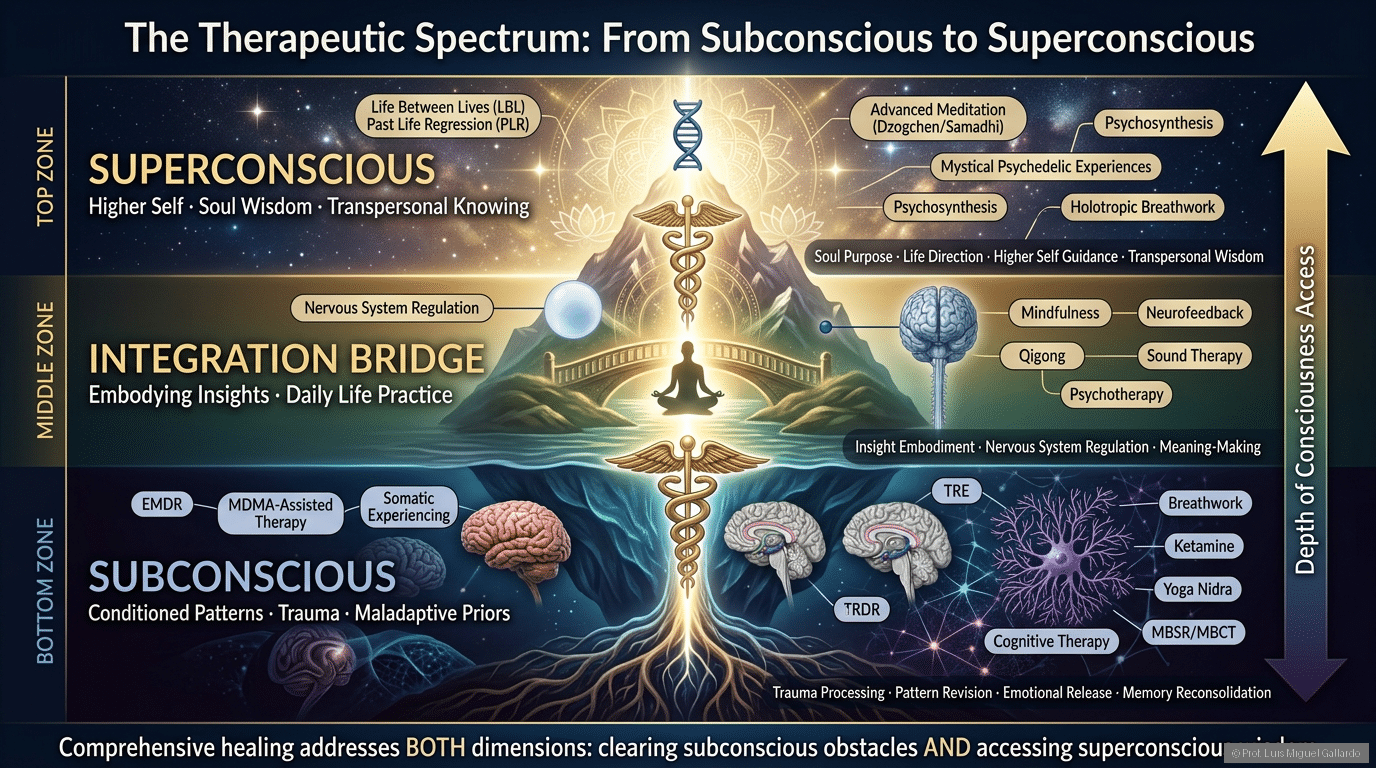
The paper’s central argument is as elegant as it is provocative: despite radical differences in methods, cultural origins, and theoretical languages, all these traditions converge on a single therapeutic target — the subconscious mind. And they all work, at least in part, through a shared set of neurobiological mechanisms that modern science is only now beginning to understand.
Here’s a deep dive into what the paper reveals, why it matters, and where this field is headed.
The Problem: A Fragmented Field
Imagine you’re a researcher studying how MDMA helps people process traumatic memories. Down the hall, someone else is investigating how mindfulness meditation changes brain connectivity. Across town, a clinician is using Eye Movement Desensitization and Reprocessing (EMDR) with remarkable success. And halfway across the world, indigenous healers have been using plant medicines and drumming ceremonies to heal trauma for centuries.
All of these practitioners are working on overlapping problems. All of them are inducing altered states of consciousness to access and transform deep-seated psychological patterns. And yet, they rarely talk to each other.
This is the fragmentation problem the paper sets out to address. Psychedelic researchers publish in one set of journals. Meditation scientists publish in another. Hypnotherapists, somatic practitioners, neurofeedback clinicians, and transpersonal psychologists each occupy their own professional silos with their own terminologies, conferences, and theoretical frameworks.
The cost of this fragmentation is real. It obscures fundamental commonalities in how these approaches work, limits cross-pollination of ideas, and slows down the development of integrative treatment protocols that could combine the best of each tradition. A person suffering from PTSD, for instance, might benefit from a carefully sequenced combination of somatic work to stabilize the nervous system, MDMA-assisted therapy to process the trauma, and mindfulness practice to maintain gains — but no single field is designing those kinds of integrated pathways.
The Framework: Five Clusters of Consciousness Practices
To bring order to this vast landscape, the paper organizes over 25 ASC disciplines into five major clusters.
Cluster A: Contemplative and Meditative Practices encompasses the traditions most people associate with inner work — yoga and yoga nidra, clinical hypnotherapy, qigong and tai chi, Tibetan Buddhist meditation (including practices like dzogchen and tummo), and mindfulness-based interventions such as MBSR and MBCT. These are generally gentle, sustained practices that cultivate attention and awareness over time.
Cluster B: Breathwork and Somatic Practices includes approaches that use the body as the primary entry point to altered states. Holotropic breathwork, pranayama, Somatic Experiencing, trauma-release exercises (TRE), and the Wim Hof Method all manipulate breathing patterns, body awareness, or physiological processes to access and release material held in the nervous system.
Cluster C: Plant-Based and Psychedelic Practices covers the substances currently generating enormous scientific excitement — ayahuasca, psilocybin, MDMA, ketamine, ibogaine, peyote and mescaline, and cannabis. These are pharmacological tools that alter brain chemistry directly, often producing profound shifts in consciousness within hours.
Cluster D: Ritual, Cultural, and Energetic Practices gathers the traditions most deeply rooted in communal and indigenous healing — shamanic drumming, Sufi whirling and ecstatic dance, sound therapy (singing bowls, binaural beats, music therapy), sweat lodge ceremonies, and lucid dreaming and dream yoga. These emphasize shared ritual experience, symbolic meaning, and rhythmic entrainment.
Cluster E: Neurotechnology and Sensory Modulation includes the most technologically driven approaches — neurofeedback/EEG biofeedback, transcranial magnetic stimulation (TMS), transcranial direct current stimulation (tDCS), float therapy (sensory deprivation), virtual reality therapy, and EMDR. These use external devices or carefully controlled environments to directly modulate brain activity.
What becomes immediately interesting when you line these up is how different they look on the surface — and how similar they start to appear at the level of what’s happening in the brain.
The Big Finding: Seven Shared Neurobiological Mechanisms
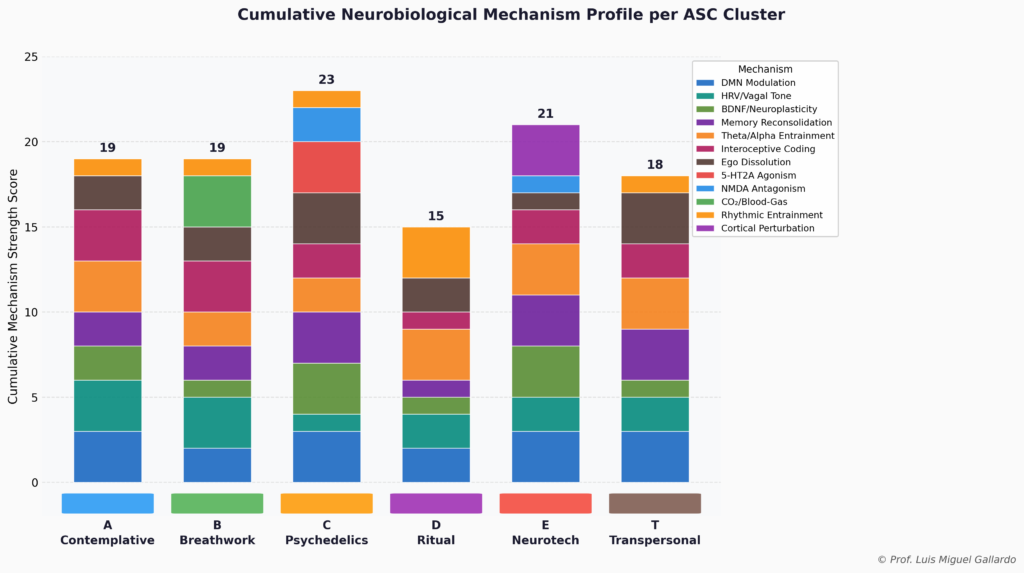
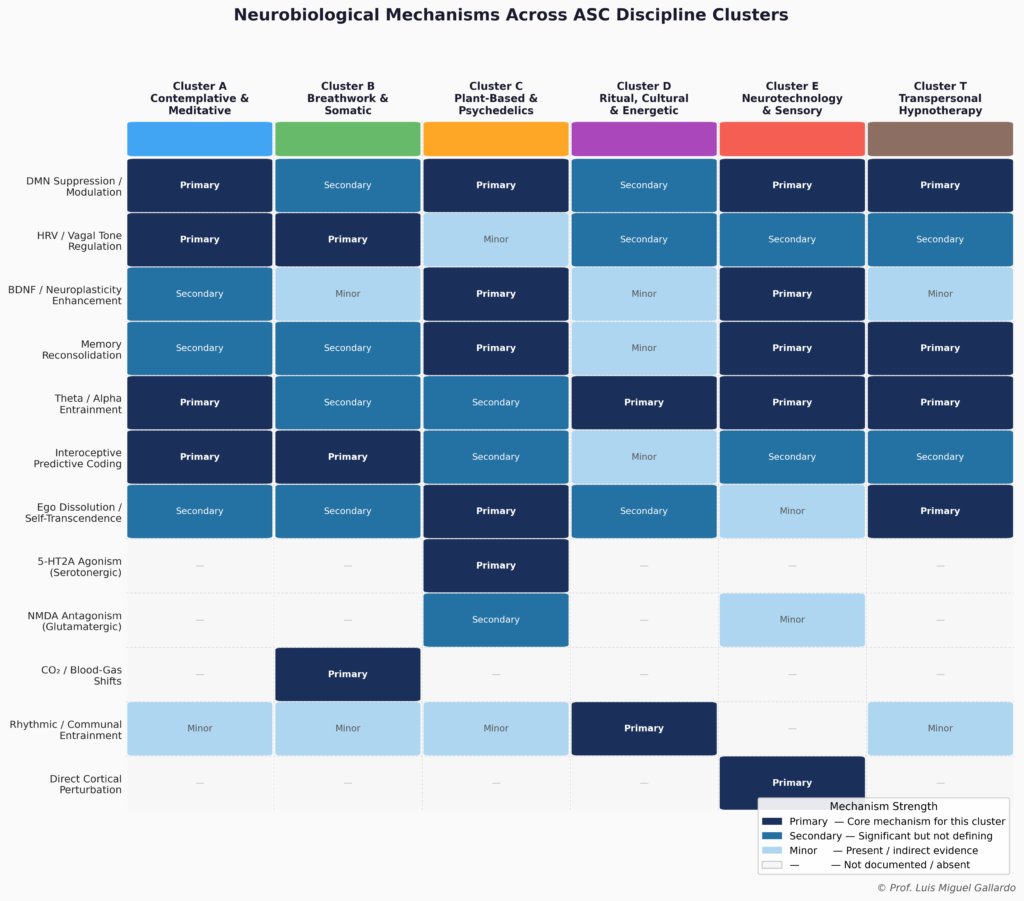
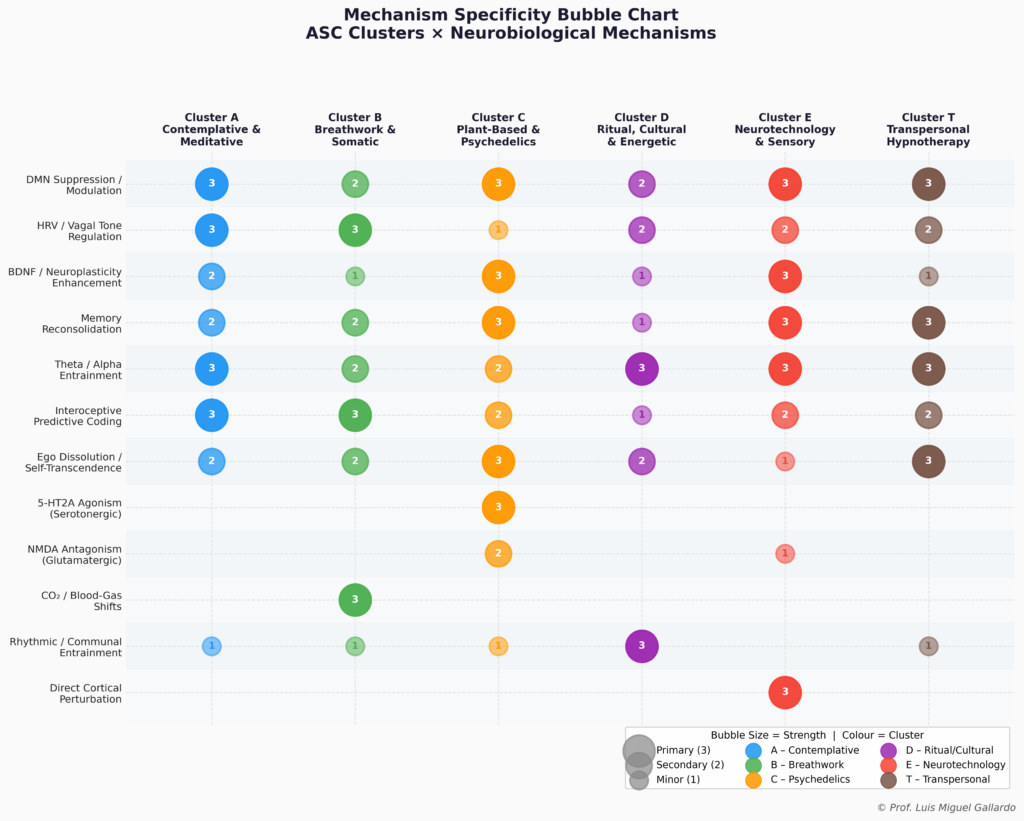
Here’s where the paper makes its most compelling case. Despite the enormous diversity across these five clusters, comparative analysis reveals seven neurobiological mechanisms that show up again and again, cutting across cultural and methodological boundaries.
1. Default Mode Network Suppression
The default mode network (DMN) is the brain system that activates when you’re not focused on the outside world — when you’re daydreaming, ruminating, or thinking about yourself. It’s essentially the brain’s “self” network. And when it’s overactive, it’s closely linked to depression, anxiety, PTSD, and addiction. That inner monologue of self-criticism, worry, and regret? That’s your DMN working overtime.
The paper documents that virtually every ASC modality, regardless of its origin or method, reduces or reshapes DMN activity. Experienced meditators show reduced DMN activation. Psilocybin, LSD, and ayahuasca produce robust DMN suppression. Hypnotic trance reduces DMN connectivity. Float tanks quiet it. EMDR modulates it during trauma processing. When the DMN quiets down, rumination eases, cognitive flexibility increases, and new perspectives become possible.
2. Autonomic Nervous System Regulation
Many psychological disorders involve a nervous system stuck in overdrive — the constant fight-or-flight activation of chronic stress, or the freeze and shutdown response of severe trauma. Heart rate variability (HRV), the variation in time between heartbeats, is a key marker of how well the autonomic nervous system can flexibly adapt to changing demands. Higher HRV means better stress resilience and emotional regulation.
ASC practices consistently improve this picture. Yoga, meditation, qigong, and tai chi increase HRV and vagal tone. Pranayama directly modulates the vagus nerve. Somatic Experiencing and TRE target autonomic regulation through the body. EMDR increases HRV during trauma processing. Float therapy activates the parasympathetic (“rest and digest”) nervous system. The body’s stress response isn’t just a side effect of these practices — it’s a primary mechanism of healing.
3. Neuroplasticity Enhancement
The brain’s ability to reorganize itself — to form new connections and prune old ones — is called neuroplasticity, and it’s heavily influenced by a protein called brain-derived neurotrophic factor (BDNF). Low BDNF is implicated in depression; high BDNF supports recovery.
Several ASC modalities give neuroplasticity a direct boost. Psilocybin, ketamine, and MDMA rapidly upregulate BDNF and promote the growth of new synapses. Long-term meditation increases gray matter density in key brain regions. Yoga upregulates BDNF. TMS induces lasting changes in synaptic connections. Neurofeedback produces measurable connectivity changes through operant conditioning of brainwaves. These aren’t just temporary state changes — they’re structural rewiring.
4. Memory Reconsolidation
One of the most exciting developments in neuroscience in recent decades is the discovery that memories are not fixed recordings. When you recall a memory, it briefly becomes malleable — open to modification before it’s stored again. This “reconsolidation window” offers a mechanism for updating traumatic memories so they lose their emotional charge.
MDMA-assisted therapy may work precisely through this mechanism: it allows patients to revisit traumatic memories in a state of safety and emotional openness, enabling the memory to be reconsolidated in a less distressing form. EMDR appears to work similarly. Psychedelics may enable reconsolidation of entire self-narratives. Hypnotherapy accesses memories in trance for potential reconsolidation. Even past life regression may function through this mechanism — processing emotionally charged material (whether literally remembered or symbolically constructed) in a way that updates current-life schemas.
5. Interoceptive Predictive Coding
The brain constantly builds predictive models of the world. It generates expectations about what’s going to happen, then updates those models based on what actually happens. When those models go wrong — when you carry implicit beliefs like “I am unsafe,” “others are untrustworthy,” or “pain is unbearable” — you get persistent anxiety, depression, or chronic pain.
ASC practices disrupt these maladaptive models. Yoga, meditation, somatic practices, and hypnosis enhance awareness of internal bodily states, enabling more accurate self-perception. Deep trance, psychedelics, and sensory deprivation temporarily suspend habitual predictive models altogether, creating space for new information. And ASC provide corrective experiences — moments of felt safety, love, or transcendence — that directly update the brain’s predictions about self and world.
6. Theta and Alpha Brainwave Entrainment
When the brain’s electrical activity shifts from the beta frequencies of ordinary alert consciousness into the slower theta (4–8 Hz) and alpha (8–13 Hz) ranges, something interesting happens: the doorway to the subconscious opens. Critical thinking relaxes. Emotional material surfaces. Imagery becomes vivid. Memory access deepens.
Meditation produces alpha and theta activity. Deep hypnotic trance is characterized by theta dominance. Shamanic drumming at 4–7 Hz literally entrains the brain into theta. Neurofeedback’s alpha-theta training deliberately cultivates these states. Float tanks induce them. Binaural beats target them. The deep trance of transpersonal hypnotherapy produces theta and delta patterns. Across traditions and technologies, accessing the subconscious means accessing theta.
7. Ego Dissolution
Perhaps the most dramatic shared experience across ASC modalities is ego dissolution — the temporary loss of the ordinary sense of self as a separate, bounded entity. It can be terrifying or profoundly liberating, but research consistently shows that the depth of ego dissolution during psychedelic experiences predicts the depth of therapeutic benefit. People who have complete mystical experiences during psilocybin sessions show the greatest and most lasting improvements in depression and anxiety.
Ego dissolution occurs with high-dose psychedelics, advanced meditation, holotropic breathwork, near-death experiences, and deep transpersonal hypnotherapy. It opens the door to mystical-type experiences characterized by unity, peace, sacredness, and a sense of profound insight. And it’s associated with reduced fear of death, increased meaning and purpose, greater openness, and lasting positive personality changes.
The Clinical Evidence: What Actually Works?
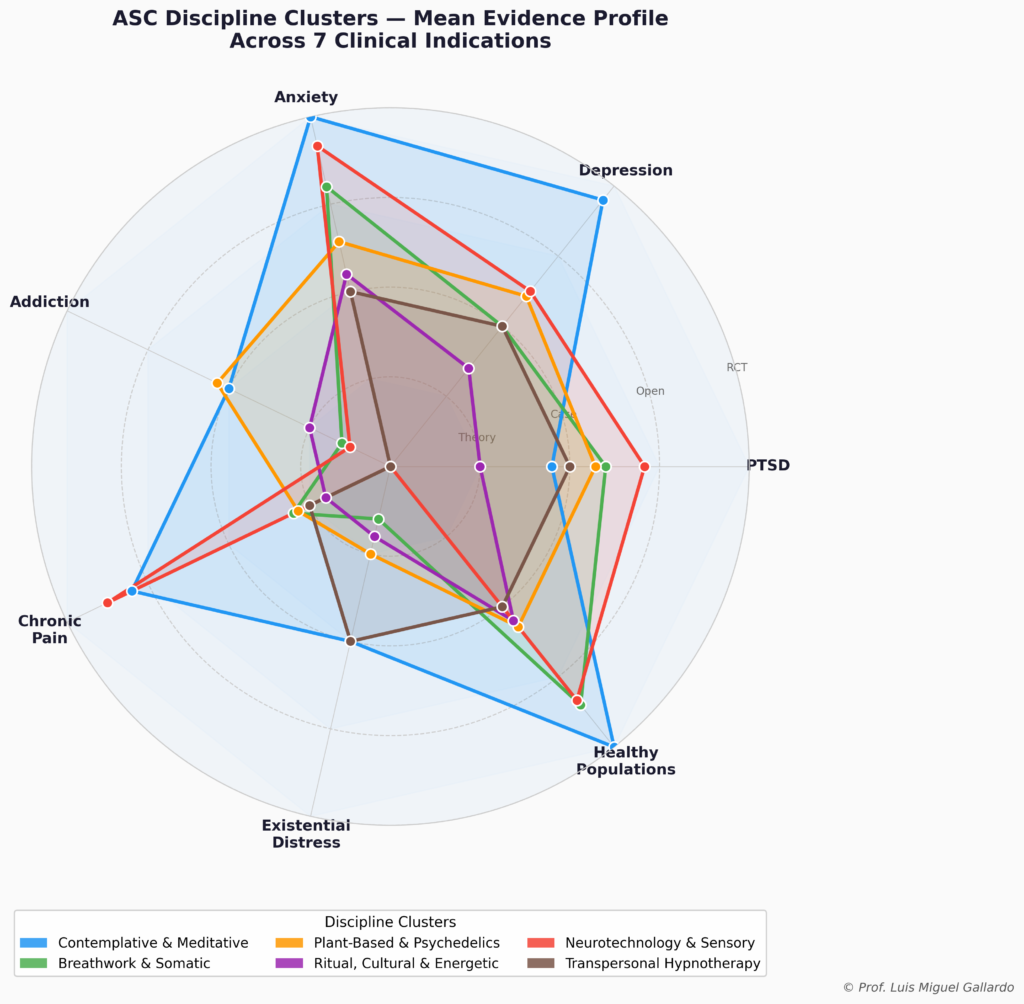
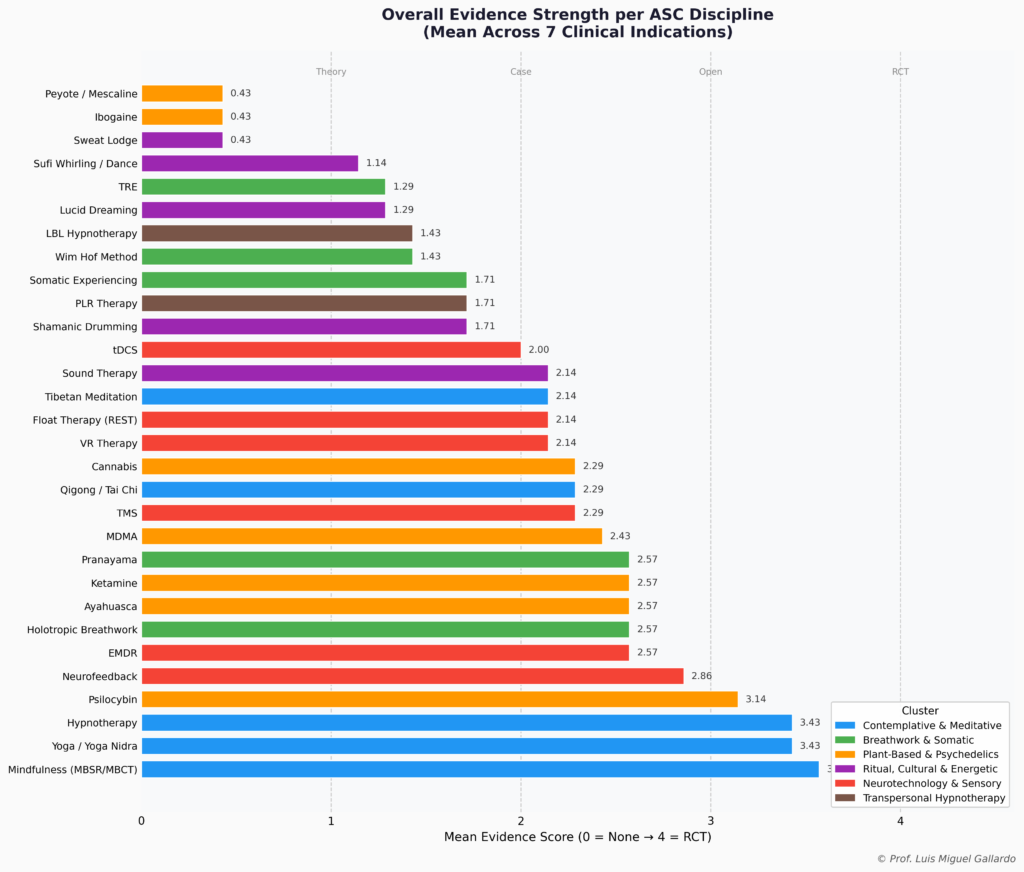
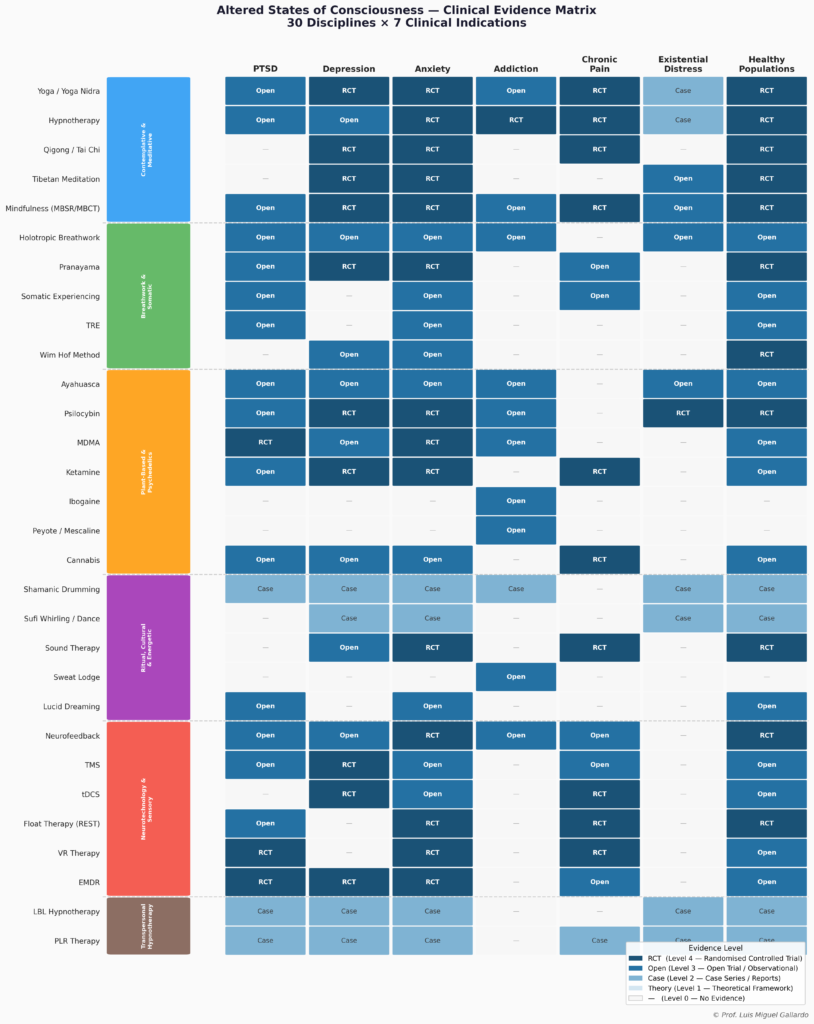
The paper includes a comprehensive evidence matrix covering 30 modalities across seven clinical indications (PTSD, depression, anxiety, addiction, chronic pain, existential distress, and enhancement of healthy populations). Rather than advocating for any single approach, it provides a clear-eyed assessment of where the evidence stands.
The strongest clinical evidence supports MDMA-assisted therapy for PTSD (with Phase 3 randomized controlled trials showing roughly two-thirds of participants experiencing clinically significant improvement), psilocybin therapy for treatment-resistant depression and end-of-life anxiety, EMDR for trauma (endorsed by both the World Health Organization and the American Psychological Association), mindfulness-based interventions for preventing depression relapse and reducing anxiety, and TMS for treatment-resistant depression (which has FDA approval).
A second tier of solid but less extensive evidence supports yoga, clinical hypnotherapy, qigong and tai chi, ketamine, cannabis, float therapy, VR therapy, neurofeedback, and sound therapy.
A third tier of modalities shows promising but preliminary evidence — these include holotropic breathwork, Somatic Experiencing, trauma-release exercises, the Wim Hof Method, ayahuasca, ibogaine, shamanic practices, lucid dreaming, and the transpersonal hypnotherapy modalities (Life Between Lives and Past Life Regression).
For specific conditions, the evidence points toward particular approaches: MDMA and EMDR lead for PTSD; psilocybin, ketamine, TMS, and mindfulness lead for depression; an impressively wide range of modalities (yoga, mindfulness, hypnotherapy, psilocybin, neurofeedback, VR, float therapy) have randomized controlled trial support for anxiety; and the emerging evidence for existential distress points to psilocybin, ayahuasca, and the transpersonal hypnotherapy approaches.
The Boldest Contribution: Putting Transpersonal Hypnotherapy on the Map
Perhaps the most distinctive feature of the paper is its decision to give serious scholarly treatment to two modalities that mainstream academia has largely ignored: Life Between Lives (LBL) hypnotherapy and Past Life Regression (PLR) therapy.
LBL hypnotherapy, developed primarily from the work of Michael Newton, uses deep hypnotic trance to guide clients into experiences of what they report as the state between incarnations — encounters with spirit guides, soul groups, councils of elders, and life planning sessions. PLR therapy, associated with figures like Brian Weiss and Roger Woolger, uses hypnotic regression to access apparent memories from previous lifetimes that seem to be influencing current-life patterns.
The paper doesn’t claim these experiences are literally what they seem. Instead, it makes a more measured and important argument: these modalities share fundamental neurobiological mechanisms with other, better-studied ASC approaches (deep trance induction, theta/delta brainwave entrainment, DMN modulation, memory reconsolidation, meaning-making through narrative reframing), and decades of clinical case series report transformational outcomes for existential distress, grief, depression, and confusion about life purpose. They deserve rigorous empirical investigation, not reflexive dismissal.
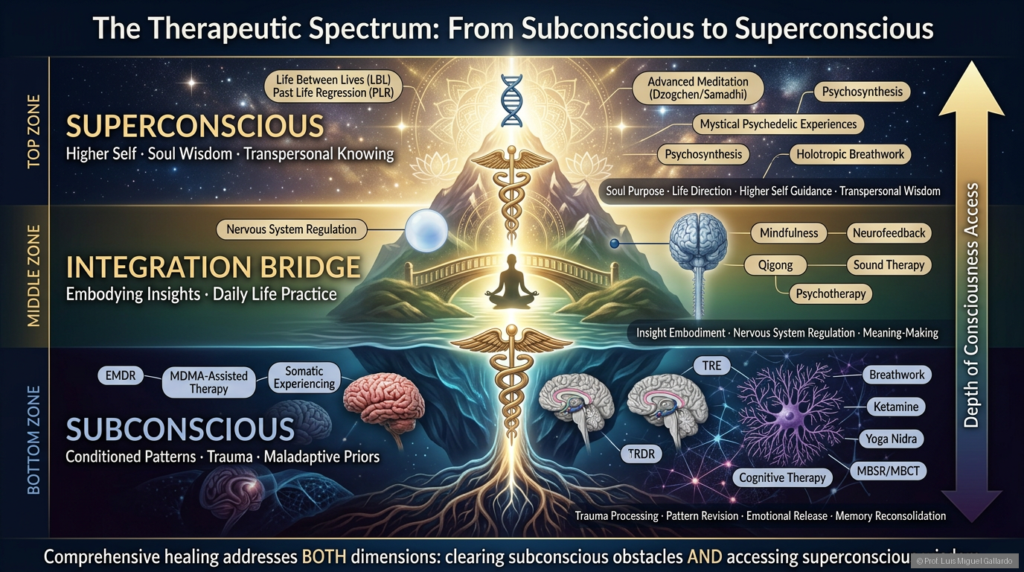
The paper makes a particularly interesting observation about LBL’s unique position in the landscape. While most ASC modalities target the subconscious — the realm of conditioned patterns, trauma, and repressed material — LBL is the only modality that explicitly targets what it calls the superconscious or Higher Self dimension. Whether one interprets this as literal soul-level contact or as a powerful therapeutic framework for accessing deep wisdom and perspective, it represents a distinctive approach to a set of problems (existential distress, fear of death, loss of meaning) that conventional therapies often struggle with.
The paper also connects LBL experiences to near-death experiences (NDEs), which have been documented in prospective studies and are associated with lasting positive psychological changes. The phenomenological parallels — encounters with beings of light, life reviews, feelings of unconditional love, loss of fear of death — suggest potentially shared mechanisms that warrant investigation.
Supporting this line of inquiry, the paper reviews Ian Stevenson’s decades-long reincarnation research at the University of Virginia, which documented over 2,500 cases of children spontaneously reporting past-life memories with details that could be independently verified. Stevenson’s methodology — prospective case investigation, verification of specific factual claims, documentation of birthmark correspondences, and occasional cases of xenoglossy (speaking an unlearned language) — represents the most rigorous empirical approach to a phenomenon that, whatever its ultimate explanation, has important implications for how we understand consciousness and memory.
The Philosophical Landscape: More Than One Way to Describe the Depths
One of the paper’s richest sections examines how different philosophical traditions conceptualize the subconscious mind — and finds remarkable convergence beneath the surface of very different vocabularies.
In yogic philosophy, the subconscious is understood as a storehouse of samskaras — latent impressions or conditioning patterns formed through past experience that generate habitual tendencies and perpetuate suffering. The path forward involves stilling the mind to perceive beyond these conditioned patterns.
In Buddhist thought, the alaya-vijnana (storehouse consciousness) functions as a repository of karmic seeds that ripen into future experience — but crucially, without a permanent self at the center.
In Jungian psychology, the collective unconscious holds universal archetypes shared across humanity that structure our experience and emerge in dreams, myths, and visionary states.
In contemporary neuroscience, predictive coding theory describes the brain as continuously generating top-down predictions about reality and updating them based on new information — with psychological suffering arising from maladaptive predictive models that resist revision.
The paper argues that these frameworks are complementary rather than contradictory. They’re each describing aspects of the same territory from different vantage points. And crucially for clinical work, therapeutic benefit may not depend on which framework a patient or therapist subscribes to. Someone can benefit from processing past-life material whether they interpret it as literal reincarnation, as Jungian archetypal content, or as a form of memory reconsolidation. The healing happens in the experiencing, not in the metaphysics.
What We Don’t Know Yet: The Research Gaps
The paper is refreshingly honest about how much remains to be discovered. It identifies ten major research gaps, several of which could reshape the entire field if addressed.
No rigorous controlled trials exist for LBL or PLR therapy. Despite decades of clinical case reports describing profound benefits, no one has yet run a proper randomized controlled trial. The paper calls for pilot RCTs, standardized protocols, validated outcome measures, and studies investigating whether therapeutic benefits require belief in literal reincarnation or work through other mechanisms.
We’ve never imaged the brain during deep transpersonal trance. What happens neurologically when someone in a Life Between Lives session reports meeting a council of elders? We don’t know. The paper calls for EEG studies during LBL sessions and fMRI research to identify what brain networks and regions activate during these experiences.
Almost no head-to-head comparative trials exist. We know psilocybin helps with depression and EMDR helps with trauma, but we rarely test them against each other. Which ASC modality works best for which person? Are certain combinations synergistic? The paper envisions a future of personalized consciousness medicine where patients are matched to optimal approaches based on their individual profiles.
We lack standardized ways to measure ASC. How deep was that trance? How complete was that ego dissolution? How do we compare the depth of a meditation experience to the depth of a psychedelic journey? The field needs common measurement tools.
Integration remains understudied. A profound ASC experience is just the beginning. How do you translate cosmic insight into everyday life? The art and science of integration — the process of weaving ASC experiences into lasting change — is critically important and poorly understood.
Epigenetic effects are barely explored. Preliminary evidence suggests that meditation and yoga can produce changes in gene expression related to inflammation and stress response. Could psychedelic experiences or deep trance work leave epigenetic fingerprints? Could some of these effects be passed to the next generation?
Stevenson’s reincarnation research hasn’t been replicated with modern tools. Neuroimaging of children during past-life recall, genetic investigation of birthmark correspondences, prospective studies following children from the first emergence of memories — the paper lays out a research program that could bring 21st-century methodology to one of the most intriguing datasets in consciousness studies.
The Big Picture: Toward Consciousness Medicine
Step back far enough from this paper and a vision of the future comes into focus — one where the artificial boundaries between meditation science, psychedelic research, hypnotherapy, neurotechnology, and indigenous healing practices begin to dissolve.
In this future, a person seeking help for PTSD might first receive somatic work to stabilize their nervous system, then MDMA-assisted therapy to process the core trauma, then mindfulness training to sustain their gains. Someone struggling with existential dread might be offered psilocybin therapy for an initial breakthrough, followed by LBL hypnotherapy to explore questions of meaning and purpose, with ongoing meditation practice for daily integration. A patient with treatment-resistant depression might receive a combination of neurofeedback, ketamine, and yoga tailored to their neurotype and preferences.
This isn’t fantasy. It’s the logical extension of recognizing that all these modalities share core mechanisms and target the same fundamental substrate — the subconscious patterns that drive our suffering. The question isn’t whether to use consciousness-based approaches in mental health care. The question is how to combine them wisely.
The paper’s most powerful insight may be its simplest: for all the diversity of human healing traditions — spanning thousands of years, every continent, and radically different worldviews — there is a deep unity at the level of what they’re doing to the brain, the body, and the mind. They quiet the ruminating self-network. They regulate the nervous system. They open windows of neural plasticity. They update stuck memories and rigid beliefs. They slow the brain into frequencies where the subconscious becomes accessible. And at their deepest, they dissolve the boundaries of the self entirely, opening onto experiences of transcendence that reliably predict lasting healing.
The ancient yogis, the Buddhist meditators, the shamanic healers, the Western hypnotherapists, the psychedelic researchers, and the neuroscientists have all, in their own ways, been mapping the same territory. This paper is among the first to lay all their maps side by side — and what emerges is something that looks very much like a new paradigm in how we understand, and heal, the human mind.
The manuscript “Altered States of Consciousness and the Subconscious Mind” is a comprehensive review paper spanning approximately 22,000 words, covering over 25 ASC disciplines across five clusters, with comparative neurobiological analysis, a clinical evidence matrix, philosophical framework comparisons, and a detailed research agenda.
ASC_Full_Manuscript_Luis_Miguel_GallardoDownloadAccess the presentation: From Global Pain & Traumato Altered States of Consciousness
https://worldhappiness.my.canva.site/global-pain-and-suffering-map-and-asc-luis-miguel-gallardo
…
Explore this topic
Field notes to your inbox
Stay connected to the shift.
Monthly essays from the Observatory, invitations to Fests and Academy cohorts. Written from abundance — never urgency.