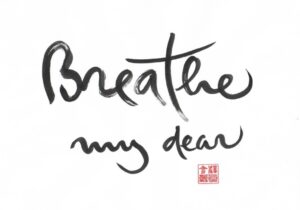
Fundamental Peace: A Lighthouse From Thích Nhất Hạnh on the Roads of Vietnam
I’m traveling in Vietnam now—the land that gave the world


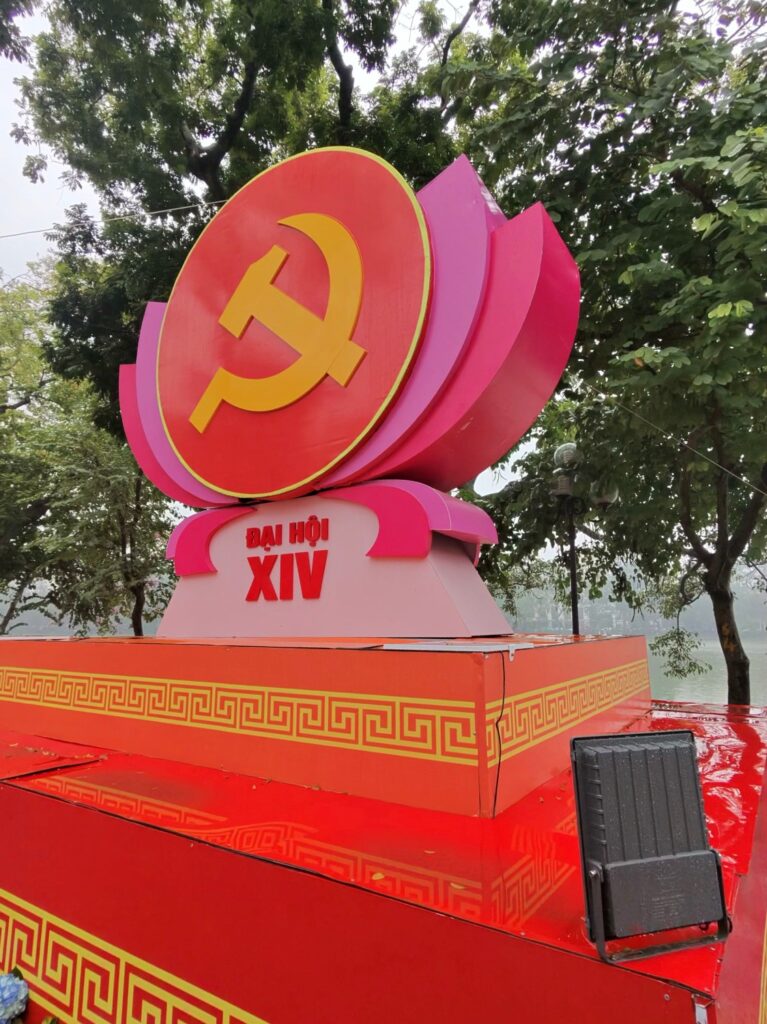
Hanoi has a particular kind of energy in January—quiet streets in the early morning, the scent of tea, and an almost tangible sense of history moving through the present. This year, that feeling is amplified as the city hosts (and the country turns its attention toward) the 14th National Party Congress of the Communist Party of Vietnam, scheduled for January 19–25, 2026—a five‑yearly gathering meant to set strategic direction and policy priorities through to 2030, and beyond.
In moments like this—when a nation assembles to discuss its future—it becomes natural to ask a deeper question: What kind of development are we truly pursuing? Not only growth in output or infrastructure, but growth in human flourishing. Not only progress measured by numbers, but progress measured by peace, meaning, trust, and happiness.
Strikingly, the announced theme for the XIV Congress explicitly includes the aspiration for “peace” and “happiness” alongside prosperity, civilization, and national development goals. That language matters. Because it quietly points toward a truth we often forget:
A society does not become happy by accident. It becomes happy by design.
And one of the most powerful design tools any society has is its education system.
To reflect on Vietnam today—its political deliberations, its cultural memory, its fierce commitment to learning—it is almost impossible not to encounter the long shadow of Confucius.
Confucius is widely remembered not only as a philosopher but as a teacher—even described as one of the first to advocate making education broadly available and to elevate teaching into a serious vocation. His influence has moved across centuries and borders, shaping how much of East Asia came to think about:
At the heart of Confucian ethics is the cultivation of virtue—especially ren (often translated as humaneness or benevolence), a foundational quality oriented toward building a flourishing human community. In the Analects, Confucian moral formation is often expressed through a constellation of qualities—benevolence (ren), righteousness (yi), ritual propriety (li), wisdom (zhi), and trustworthiness (xin)—not as abstract theory, but as lived practice.
If we step back, Confucius’ main impact can be summarized in one sentence:
He made education a pathway to moral character—and moral character a foundation for social order.
That idea is still alive globally. A vivid symbol is UNESCO’s Confucius Prize for Literacy, established in 2005, which recognizes literacy initiatives—especially functional literacy supported by technology for rural adults and out-of-school youth. Whether one agrees with all historical uses of Confucian thought or not, the educational legacy is undeniable: learning is not merely skill acquisition; it is human development.

Vietnam’s relationship with Confucius is not only philosophical—it is architectural, institutional, and cultural.
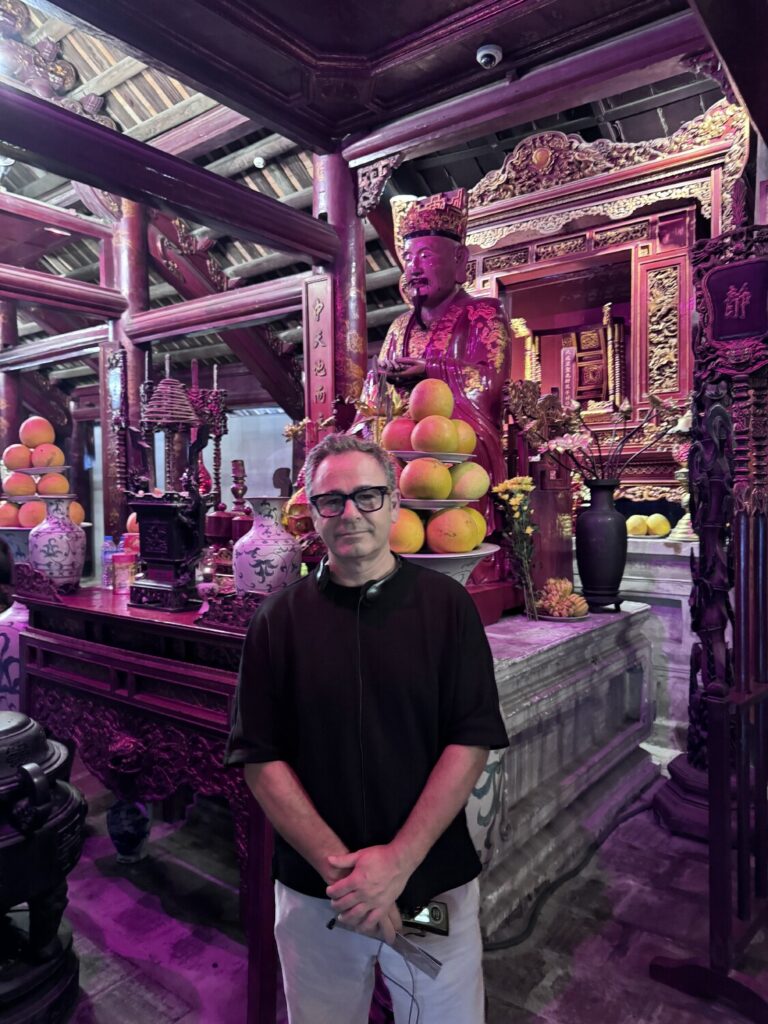
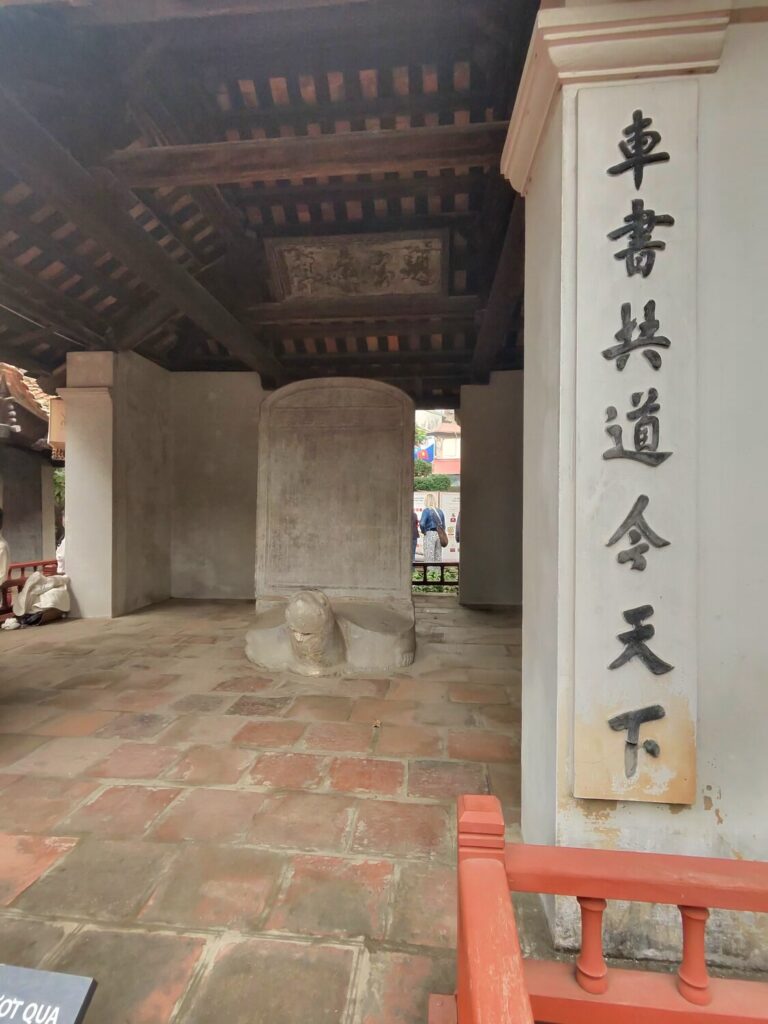
In Hanoi, Văn Miếu – Quốc Tử Giám (the “Temple of Literature”) stands as a living bridge between spiritual reverence, scholarship, and public life. Vietnam’s tourism information resources describe the site as founded as a Confucian temple in 1070, and note that in 1076 Vietnam’s first university (Quốc Tử Giám) was established within the temple complex to educate the mandarin class.
Even more symbolic are the stone steles—records of those who passed royal examinations—now recognized in UNESCO documentation about the site’s examination records and their cultural significance. Vietnam’s own heritage writing preserves a striking line associated with the steles, a sentence that captures the historic educational philosophy of state-building:
“Excellent talents with good virtue are the sap of the country.”
That sentence is not only a quote from the past—it is a mirror for the present.
Because it implies something profound:
Education is national infrastructure. Not only roads and bridges—but people. Not only competence—but virtue. Not only knowledge—but the inner qualities that make a society strong without becoming harsh.
This is the point where my work on Happytalism enters the conversation—not as a replacement for culture or governance, but as an evolution of what we measure, value, and cultivate.
If I had to express Happytalism in one line, it would be this:
Happytalism is the practice of building economic and social systems that optimize for human flourishing—not merely consumption.
And the deepest condition for flourishing is what I call Fundamental Peace.
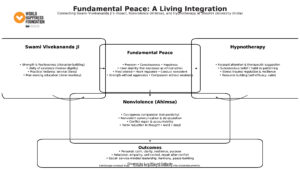
Fundamental Peace is not passive. It is not “avoid conflict.” It is a foundation—an inner and social stability that allows creativity, cooperation, and abundance to emerge. It is the kind of peace that lives:
If Confucius taught that social harmony is built from self-cultivation outward, then Fundamental Peace is the modern language for that same architecture:
peace in the self → peace in relationships → peace in institutions → peace in society.
And that leads directly to education reform—because schools are where these capacities are trained.
Vietnam’s historic educational model was deeply shaped by Confucian ideals and, for long periods, by examination-based merit selection. Scholars have documented how Vietnam’s imperial examinations were used to select bureaucrats starting in the 11th century, leaving a long-run imprint on human capital and social development.
There is something admirable in that legacy: respect for learning, the honor given to scholarship, and the belief that education can elevate both individuals and society.
But the modern world is asking for a next step.
In the 21st century, the question is not only:
It is also:
A Happytalist lens insists that the education system must evolve into Schools of Happiness—not schools that “entertain,” but schools that systematically cultivate:
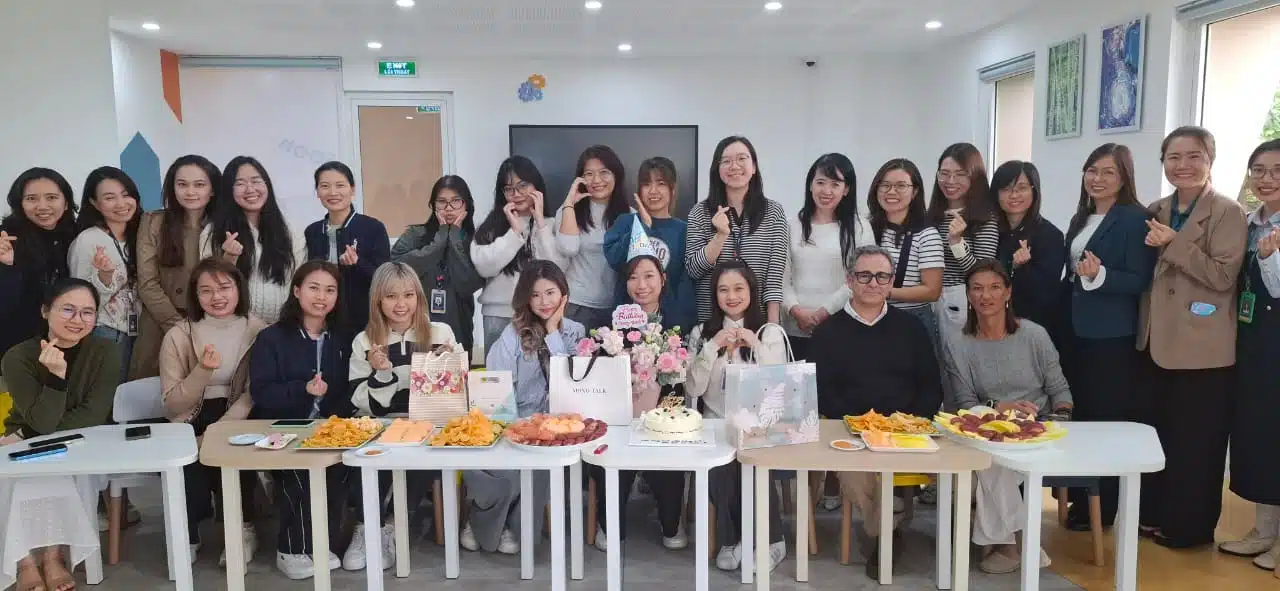
In this context, my visit to Wellspring International Bilingual Schools becomes more than a book presentation. It becomes a case study in what the future can look like.
Wellspring publicly describes itself as a “Happy school” (Trường học hạnh phúc) and invites families into a learning journey framed explicitly through well-being (“môi trường học tập well-being”). That matters, because it signals a cultural shift:
Wellbeing is not an “extra.” It is part of the mission.
When a school names happiness and well-being as core, it quietly changes everything:
In a city that carries the memory of Confucian academies, there is something beautifully circular about this: Hanoi once housed institutions that trained scholars for governance. Today, it can also become a global example of institutions that train whole humans for life.
A School of Happiness is not a slogan. It is a system.
Here are principles that translate Fundamental Peace and Happytalism into educational design—principles that any school system can adopt, and that schools like Wellspring point toward:
If we don’t teach wellbeing, we still teach something—often stress management through silence, or confidence through comparison.
Instead, treat wellbeing as “basic literacy”:
Teachers don’t just deliver curriculum; they model nervous-system states. A regulated, supported teacher creates regulated, supported students—without needing to say a word.
This means:
This is where abundance mindset becomes practical.
A scarcity mindset says:
An abundance mindset says:
Schools can create abundance mindsets through:
Happytalism is not anti-success. It is pro-flourishing.
Prosperity becomes healthier when students learn:
If a school measures only test scores, it will optimize only test scores.
A School of Happiness tracks:
This is not “soft.” It is strategic. Because cultures create outcomes.
As the XIV Party Congress convenes in Hanoi to chart national strategy, it is worth remembering that the future is not built only in convention centers. It is built in classrooms, homes, and the inner lives of young people.
Confucius’ great educational insight—and Happytalism’s central promise—meet in one shared principle:
A flourishing society begins with cultivated human beings.
Fundamental Peace is the root system. Schools of Happiness are the nursery. Happytalism is the economy of a society that decides: we will grow humans, not just output.
And if Vietnam’s future ambitions include “happiness,” then the most direct and humane path to that goal is clear:
Teach it. Practice it. Design for it.
Wellspring Hanoi International Bilingual School World Happiness Foundation World Happiness Fest – bēCREATION World Happiness Academy
#Happytalism #FundamentalPeace #SchoolsOfHappiness #EducationForWellbeing #HumanFlourishing #AbundanceMindset #WellbeingEconomy #PeaceThroughEducation #ConfucianWisdom #VietnamEducation #HappySchools #WholeChildEducation #InnerPeace #EthicalLeadership #FutureOfEducation #WellbeingInSchools #EducationTransformation #ConsciousLeadership #ProsperityWithPurpose #WellbeingFirst #LearningForLife #GlobalHappiness #HumanCenteredDevelopment #EducationForPeace #HappinessAtSchool #CultureOfCare #FlourishingCommunities #PurposeDrivenEducation
I’m traveling in Vietnam now—the land that gave the world
In the heart of Vietnam – the homeland of Zen
Swami Vivekananda Ji: A Living Impact on Strength, Service, and