
THE ROAD MAP TO SUPRACONSCIOUSNESS: From the Diagnosis of a World in Crisis to the Conscious Evolution of Humanity
A Framework for Systemic Transformation Through the Wisdom of Hawkins,
I have a memory that keeps returning to me.
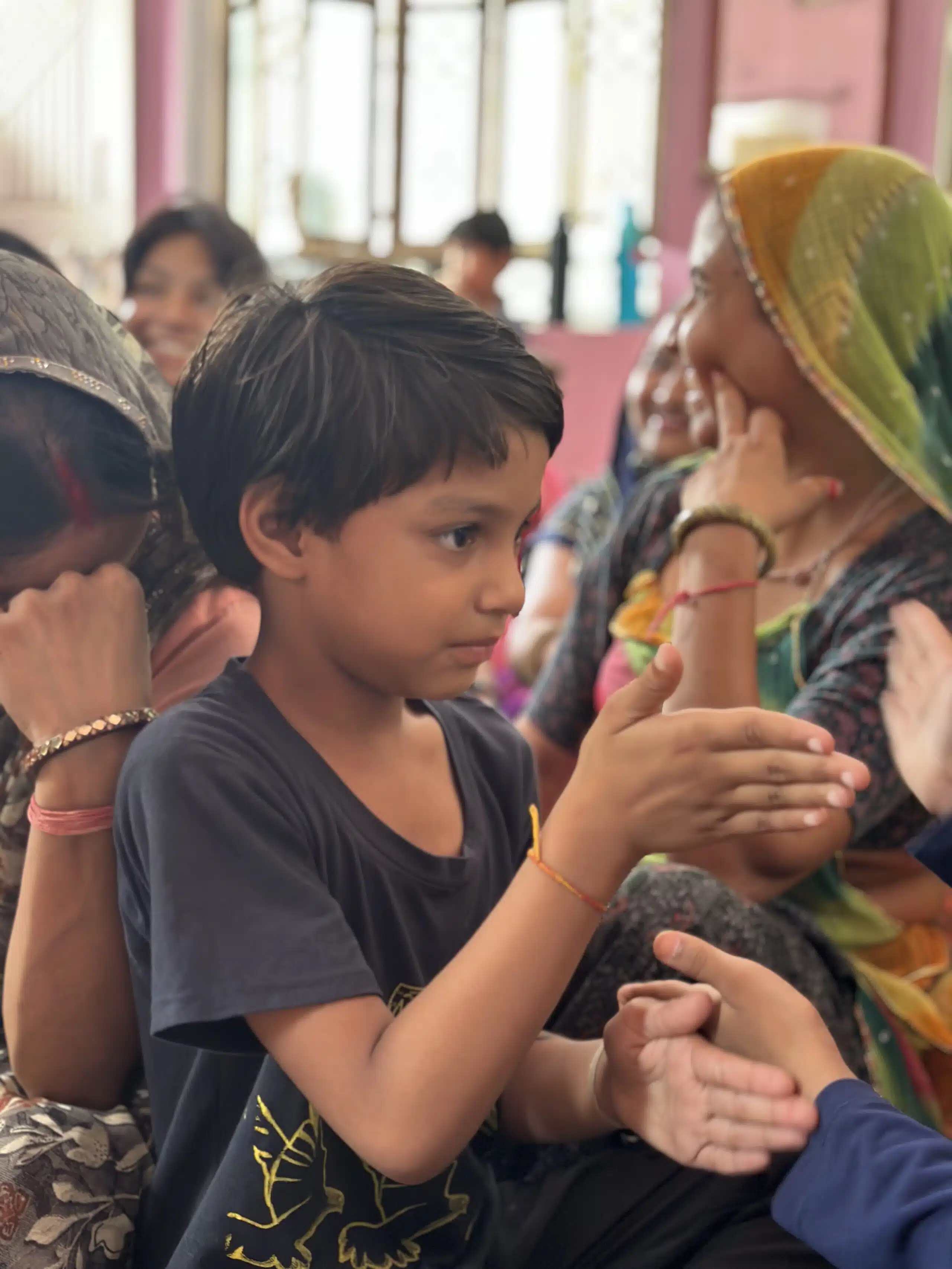
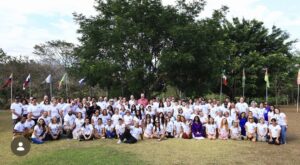
I am in Hanoi — it is January, the city is buzzing with the energy of the XIV Party Congress — and I slip away from the conference halls into a school. WellSpring Bilingual School. I am there to share Happytalism with students who are, maybe, eleven or twelve years old.
I expect polite attention. I get something else entirely.
I get questions.
Not the questions adults ask — the careful, credential-checking, what-does-this-mean-for-my-organization questions. These are the questions children ask when they have not yet learned to perform sophistication:
Why do grown-ups say happiness matters but then only talk about grades?
If belonging is so important, why do some kids eat lunch alone every day?
Can a city decide to be happy? Who decides?
I stood there in that Hanoi classroom — incense drifting in from somewhere outside, scooters threading past the window — and felt something shift in me. These children were not waiting for the civilization we are trying to build. They were already asking for it. Already sensing its absence. Already, in their way, mourning what has not yet arrived.
This post is for them. And for every adult responsible for the inner life of a child.
Children do not need to be taught what belonging feels like. They know. What they need is adults brave enough to build institutions that don’t take it away.
This is the fourth post in a series that began with the Belonging Revolution, moved through the economics of Gross Global Happiness, and paused last week to ask who leads the transformation — the Chief Well-Being Officer working from the inside out.
But every one of those posts pointed here. Because the truest answer to the question of who leads the transformation is not the CWO in the boardroom.
It is the child in the classroom. The one we are still in time to reach.
The UN World Youth Report — to which the World Happiness Foundation offered a formal response in February — documented what many parents, teachers, and pediatricians have been living with for years. Youth mental health is not in a crisis. It is in a collapse.
Anxiety, depression, and loneliness are rising in every age cohort, with the steepest increases among those aged ten to seventeen. Self-harm rates are climbing. Sense of purpose is falling. The number of young people who say they have no one to talk to is, in wealthy countries, staggering.
And the standard response is, predictably, inadequate: more therapy, more apps, more awareness campaigns, more helplines.
These help some individuals. They do not address the cause.
The cause is structural. We have built childhoods oriented entirely around performance — academic performance, social performance, the performance of happiness on social media — while systematically starving children of the three things that actually produce wellbeing: belonging, meaning, and inner freedom.
We are treating the symptom while preserving — and often intensifying — the conditions that produce it.
The Conscious Kids Fest was born from the refusal to accept that this is inevitable.
When people hear ‘Conscious Kids Fest,’ they sometimes imagine something gentle and peripheral — arts and crafts, mindfulness stories, well-meaning adults teaching children to breathe.
It is much more radical than that.
Conscious Kids Fest is, at its core, a proof of concept. It demonstrates — concretely, joyfully, to children who experience it and to the adults who witness it — that a different relationship between a child and their inner life is possible. That presence is teachable. That empathy can be practiced. That the question ‘who am I, really, beneath the grades and the roles and the likes?’ is a question children can begin to answer, given the right environment.
What does that environment look like?
These are not supplementary skills. They are the foundation on which everything else rests. A child who knows how to arrive in their own body, who has practiced being with their own mind without judgment, who understands that their emotions carry information rather than constitute catastrophe — that child will learn more, relate better, suffer less, and contribute more.
That child, grown, will be the Chief Well-Being Officer we wrote about last week.
We spend eighteen years building a child’s résumé. The Conscious Kids movement asks: what if we spent even a fraction of that time connecting to their soul?
My colleague Paulina Nava Villazón — whose recent piece on Soul·Full Living moved many of our readers — wrote something that I keep returning to:
‘For over a decade, I’ve been on the path of personal and spiritual development. I read the books, joined the courses, listened to the meditations. And yet something was missing — I was intellectualizing spirituality, not fully living it.’
That distinction — intellectualizing spirituality versus living it — is the heart of what we are trying to offer children before the performing has become a habit too deep to question.
The five steps of Soul·Full Living that Paulina describes — awareness, acceptance, authenticity, alignment, and action from essence — are not an adult curriculum awkwardly adapted for children. They describe the natural movement of a child who has not yet been told that their soul is irrelevant.
Children are already aware. They notice everything — the tension in a room, the sadness behind a parent’s smile, the particular quality of a good day versus a day that felt wrong for reasons no one could name. The task is not to teach awareness. It is to not train it out of them.
Children are already authentic. Watch a three-year-old. Watch a five-year-old who has not yet learned that certain feelings are not allowed. The task is not to build authenticity from scratch. It is to create environments — schools, families, communities — in which authenticity remains safe as children grow.
And children are already capable of action from essence. I saw it in Hanoi. I see it in every Conscious Kids gathering. When given the question and the space, children generate answers that shame the sophistication of our most carefully developed adult frameworks.
They know. We keep forgetting that they know.
The ITM teaches us that the shadow does not stop at the door of adulthood. Every teacher carries their unexamined wounds into the classroom. Every parent brings their unlived life into the relationship with their child. Every administrator shapes the school’s culture from the unspoken scripts they inherited from institutions that shaped them.
This is not blame. It is the structural reality of how intergenerational patterns move.
And it is why the Schools of Happiness programme does not begin with curriculum. It begins with teachers. With the inner life of the adult who will spend six hours a day in a room with twenty-five children who are looking — whether they know it or not — for someone who has arrived.
Thich Nhat Hanh wrote about this with characteristic simplicity: the most important thing a teacher can do is to be present. Not to have the right answers. Not to deliver the right content. To be present — to have arrived, genuinely, in this moment, in this room, with these children.
You cannot give what you do not have. Fundamental Peace is not a pedagogy you can perform. It is a ground you must have found, at least partially, in yourself.
This is why teacher well-being is not a soft priority. It is the structural prerequisite for student well-being. An institution that invests in one without the other is building on sand.
The most important question in education is not ‘what are we teaching?’ — it is ‘who is doing the teaching, and from what inner ground?’
One of the most moving aspects of this work is watching children across radically different cultural contexts arrive at the same discoveries.
In Kolkata, children at a school near the Ramakrishna Mission sit in circle and are asked: when do you feel most yourself? A girl of nine says: ‘When I am singing, but no one is watching.’ A boy of eleven says: ‘When I help someone and they do not know it was me.’ These are not performances. They are glimpses of essence.
In Hanoi, the children who asked me the sharp questions about happiness and grades — they are already philosophers. They are already doing the work. They just need an institution that meets them there.
In Miami, at the World Happiness Fest, the Conscious Kids Fest fills a tent with children who have been brought by parents from fifty countries. They do not share a language. They do not share a background. Within twenty minutes, they are building something together — a city made of cardboard and intention, with hospitals and parks and a school that has, they decide collectively, no walls.
A city without walls.
I wrote that down. I have not stopped thinking about it since.
The Belonging Revolution gave us the architecture. Gross Global Happiness gave us the metrics. The Chief Well-Being Officer gave us the leader. And now the Conscious Kids movement gives us the proof — and the purpose.
Because ultimately, the reason to build a Belonging Revolution is so that no child eats lunch alone. The reason to develop Gross Global Happiness metrics is so that a child’s sense of meaning registers as a real social outcome. The reason to develop Chief Well-Being Officers is so that the institutions where children spend their childhoods are led by people who understand that a child’s inner life is not peripheral to the mission — it is the mission.
Vivekananda said that the nation is made of its individuals — and the individuals are made in their youth. He was right. Sarada Devi demonstrated it. Thich Nhat Hanh lived it. Aurobindo theorized the supramental evolution that begins with the education of consciousness in its youngest expressions.
The lineage we have been tracing through this series — Vietnam, Kolkata, Zaragoza, Hanoi, Miami — all points to the same truth: the transformation of civilization is not a project for governments alone, or for academics, or for CEOs with enlightened metrics.
It is a project that begins in a classroom. With a teacher who has arrived. With a child who is asking — who is always asking:
Is there a place for me here?
Do I matter?
Am I known?
Our only work — the work of this Foundation, of every school and city and hospital and institution that carries the Happytalist vision — is to make sure that the answer, always, is yes.
The children of Hanoi are waiting for that yes.
So are the children everywhere.
Let us not make them wait much longer.
Conscious Kids | Schools of Happiness | Youth Mental Health | Soul·Full Living | Happytalism | Education | Belonging | Fundamental Peace | ITM | Thich Nhat Hanh | Vivekananda | Conscious Kids Fest
About the Author
Luis Miguel Gallardo is the Founder & President of the World Happiness Foundation, creator of Happytalism, and Professor of Practice at Shoolini University’s Yogananda School of Spirituality and Happiness. He is the founder of Conscious Kids Fest and the Schools of Happiness program.
A Framework for Systemic Transformation Through the Wisdom of Hawkins,
A Comprehensive Global Mapping of Authoritarianism, Armed Conflict, and Violations
Joseph Campbell gave the modern world a powerful language for