

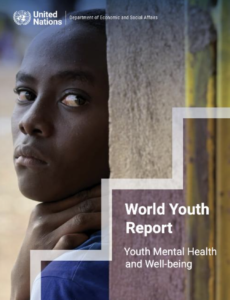
A World Youth Report Response from the World Happiness Foundation
Executive Summary I welcome the United Nations World Youth Report
There is a moment, familiar to anyone who has sat in a hospital waiting room, passed through an anonymous city corridor, or watched a child stare into a phone screen during recess, when you feel the weight of a world that has perfected proximity while forgetting presence. We have never been more connected by signal. We have never been more starved for belonging.
This is not a crisis of technology. It is a crisis of architecture — the invisible structures we build into our schools, our cities, our healthcare systems, and our economic models. These structures can either nourish the human soul or quietly hollow it out. At the World Happiness Foundation, we believe the time has come to rebuild them — and that belonging is the cornerstone.
Belonging is not a feeling we stumble into. It is a condition we design.
When the United Nations released its World Youth Report on mental health, it confirmed what many of us had long sensed: across generations and geographies, the deepest wound is not depression or anxiety as isolated clinical phenomena, but the collapse of meaningful connection. Young people are reporting rates of loneliness that would have been unimaginable a generation ago — not because they are alone in their rooms, but because the rooms they inhabit, physical and digital alike, were not designed for belonging.
The World Happiness Foundation’s response to that report was clear: we cannot treat the symptoms of disconnection while leaving the architecture of disconnection untouched. What is needed is not more helplines (though they matter) or more awareness campaigns (though they help). What is needed is a fundamental redesign of the institutions that shape human life from childhood through age — and that begins with how we conceive of schools, cities, and hospitals.
Education, at its root, is a belonging practice. The word itself — educare — means to draw out, to lead forth. But somewhere along the way, we confused drawing out the human potential within a child with pouring standardized content into them. Schools became places of measurement rather than meaning, competition rather than connection.
Schools of Happiness are a corrective to that drift. They do not abandon academic excellence — they reframe what excellence means. In a School of Happiness, a child’s sense of belonging to their class, their community, and themselves is treated as a foundational competency, not an extracurricular nicety. Contemplative practices that help children develop self-awareness, circle conversations that teach the art of listening, and service-learning projects that weave individual growth into community care — these are not luxuries. They are the curriculum of a civilization serious about its own future.
The evidence from neuroscience and developmental psychology supports this wholeheartedly. Children who feel they belong learn more, retain more, and become more. They are also significantly less likely to fall into the spirals of anxiety and isolation that the UN report documents so soberly. Belonging is not a soft outcome. It is the hardest, most durable foundation there is.
A child who feels they belong in school will spend their entire life building places where others can belong too.
Cities are perhaps the most ambitious human invention — millions of strangers choosing, implicitly, to share space, infrastructure, and fate. At their best, cities are temples of encounter: the neighborhood market where you know the vendor’s name, the plaza where generations overlap, the park bench that invites the unexpected conversation. At their worst, they are engines of anonymity — designed for throughput, not togetherness.
The Cities of Happiness program asks mayors, urban planners, and policymakers to hold a single question at the center of every design decision: does this increase or diminish the likelihood that a resident will feel they belong here? It sounds deceptively simple. In practice, it is transformative.
Consider what changes when belonging becomes a design criterion: streets that invite pedestrians rather than cars; mixed-use districts that create the conditions for chance encounter; public art that reflects the community back to itself; governance structures that include citizens not as consultants but as co-creators. These are not utopian fantasies. They are the lessons of every city that has managed to remain human at scale — from Bogotá’s ciclovia to Copenhagen’s harbor baths to the ancient agoras of Greece, which give our own community gatherings their name.
Happytalism, as a framework, holds that the purpose of any economy or political system is to maximize the freedom, consciousness, and happiness of every being within it. A City of Happiness is Happytalism made manifest in concrete and cobblestone — a living proof that we can organize collective life around flourishing rather than mere productivity.
Of all the places where belonging matters most, and is most often absent, it is the hospital. Illness is already an experience of profound vulnerability — the body asserting its limits, the self confronted with its fragility. Yet we have built our healing institutions around efficiency rather than encounter, around the management of conditions rather than the care of persons.
Hospitals of Happiness do not ask clinicians to become therapists or administrators to become philosophers. They ask something simpler and more radical: that every person who passes through the institution’s doors — patient, family member, nurse, surgeon, cleaner — be treated as someone whose belonging to the human community is sacred and deserves to be honored in every interaction.
This has measurable outcomes. Research consistently shows that patients who feel seen, heard, and cared for — not just treated — recover faster, require less pain medication, and experience significantly lower rates of post-treatment depression. The healing relationship is itself therapeutic. Belonging is medicine.
When we imagine a Hospitals of Happiness network spanning continents, we are not imagining a softer version of healthcare. We are imagining a wiser one — one that understands that the human being on the bed is not a collection of symptoms but a soul, embedded in relationships, carrying a history, and deserving of care that honors both the body and the being.
Healing happens not only in the body but in the space between people — the quality of presence we offer one another.
All the programs described above rest on a philosophical foundation that the World Happiness Foundation has been building for years — one that draws from the deepest wells of human wisdom across traditions.
Swami Vivekananda taught that seeing the divine in every human face is not a theological abstraction but a practical discipline — the most demanding and most liberating practice available to us. Thich Nhat Hanh showed that interbeing is not a metaphor: we are literally made of each other, our happiness inseparable from the happiness of those around us. Sri Aurobindo pointed toward a supramental consciousness in which the artificial boundary between self and other begins to dissolve — not in mystical dissolution but in luminous, practical love.
These are not peripheral inspirations for the World Happiness Foundation’s work. They are its beating heart. Belonging, at its deepest, is the recognition that what we do to others, we do to ourselves — and that every institution we build is either a temple to that recognition or a monument to its forgetting.
The Belonging Revolution is not a program. It is a reorientation — a turning of the collective attention back toward the fundamental fact that we need each other, not merely as resources or contacts, but as presences. As witnesses. As the mirrors in which we discover who we are.
Global transformation is built from local choices. Here are four invitations — one for each institution closest to your life:
In your school or your child’s school: advocate for at least one practice each week — a circle conversation, a gratitude ritual, a community service moment — that places belonging at the center of learning.
In your city: attend a public meeting, support a local artist, walk a route you have never walked. Belonging in cities is built one small encounter at a time.
In your hospital or healthcare setting: if you are a clinician or administrator, ask: what would it look like to greet every patient as a person first? If you are a patient or family member, remember that your presence is itself a form of medicine.
In your own inner life: practice the Fundamental Peace that Thich Nhat Hanh pointed toward — not as a retreat from engagement, but as the ground from which genuine belonging becomes possible. You cannot offer a home to others if you have not yet found one in yourself.
We are living through what historians may one day call the Great Unmooring — a period in which the traditional anchors of belonging (religion, geography, family structure, lifetime employment, national identity) have loosened or transformed faster than new ones have formed. This is disorienting. It is also an extraordinary opening.
When the old forms of belonging dissolve, we are invited to discover what belonging really is — not a structure to belong to, but a quality of attention to bring to every structure we inhabit. Not a club to join, but a way of meeting the world.
The World Happiness Foundation’s programs — Schools, Cities, Hospitals, and the communities that gather around them — are experiments in that discovery. They are our collective attempt to answer the question that every anxious young person, every isolated elder, every overwhelmed frontline worker is asking: Is there a place for me here? Do I matter? Am I known?
The answer we are building, together, is: Yes. Always. Come.
About the Author
Luis Miguel Gallardo is the Founder & President of the World Happiness Foundation, a UN-recognized not-for-profit dedicated to advancing freedom, consciousness, and happiness as pillars of a new civilization. He is a Professor of Practice at Shoolini University’s Yogananda School of Spirituality and Happiness, and the creator of Happytalism.
Executive Summary I welcome the United Nations World Youth Report

For over a decade, I’ve been on the path of
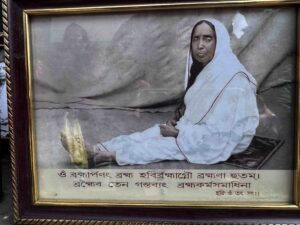
When I wrote from Vietnam, I was tracing “Fundamental Peace”