consciousness
Kolkata’s Living Flame: Sri Ramakrishna and the Next Chapter of Fundamental Peace
In Vietnam, my writing became a kind of walking practice. I listened to the country’s movement—its scooters, incense, roadside kitchens, and sudden tenderness—and noticed what it was asking of me. Not calm. Alive. And in the middle of that living current, Thích Nhất Hạnh’s voice returned like a stea
February 4, 2026·Luis Miguel Gallardo·7 min read
AI insights
In Vietnam, my writing became a kind of walking practice.
I listened to the country’s movement—its scooters, incense, roadside kitchens, and sudden tenderness—and noticed what it was asking of me. Not calm. Alive. And in the middle of that living current, Thích Nhất Hạnh’s voice returned like a steady light: “Peace is not something I reach later. Peace is what I practice now.”
I built a language for that experience—Fundamental Peace as a lived foundation, not a private mood; a set of “beams” that could travel with me in a backpack and a breath: arrive, walk, listen, act ethically, transform suffering, and remember community.
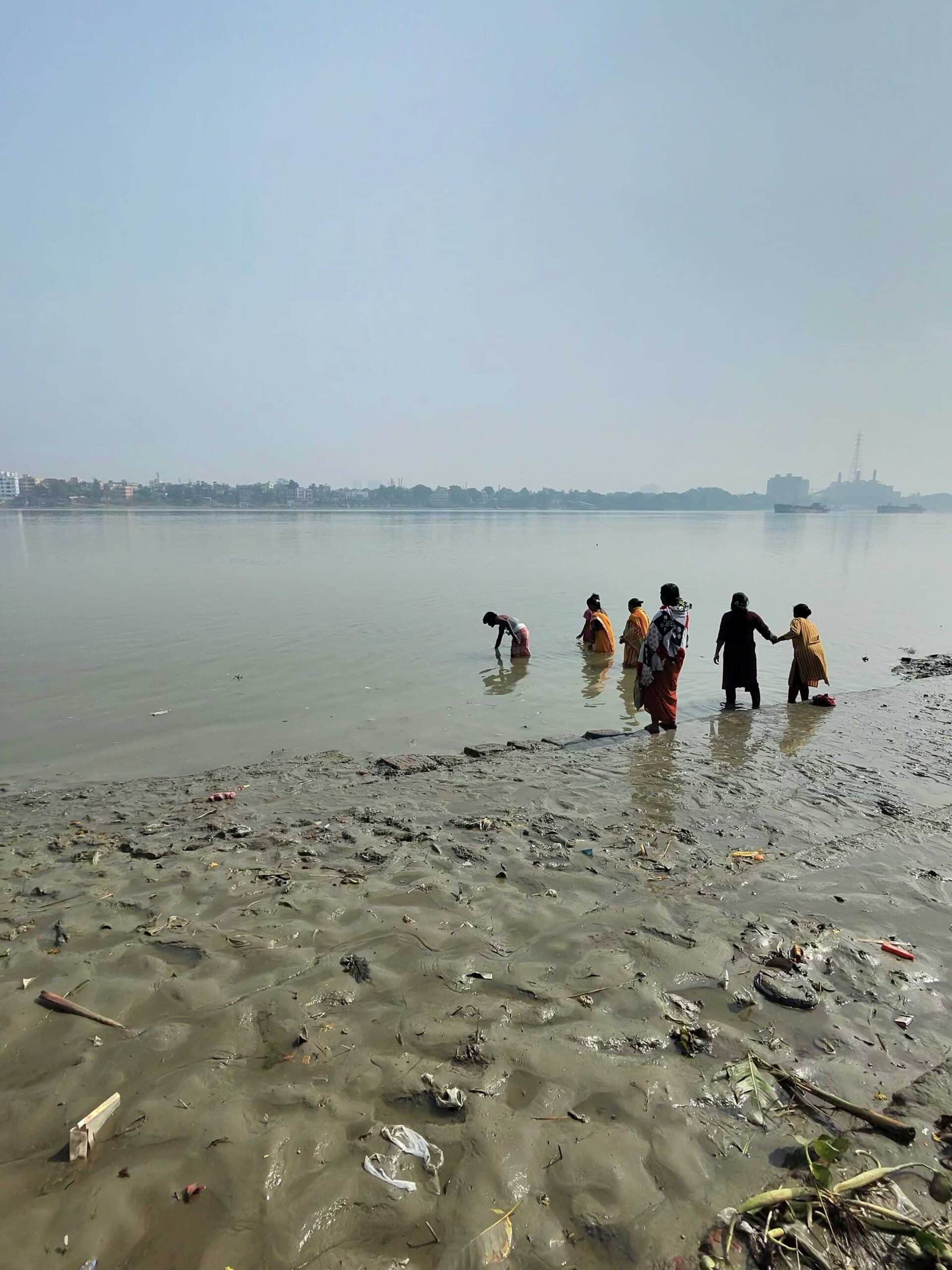
Now the road has brought me to Kolkata—and the texture changes.
Vietnam felt like a lighthouse: steady, guiding, patient. Kolkata feels like a flame: intimate, demanding, immediate. Here, spirituality doesn’t only whisper “arrive.” It dares you to burn through what is false. It calls for devotion that is not decorative, but total.
And in this city—so layered with history, poetry, hunger, brilliance, contradictions—one name keeps rising: Sri Ramakrishna.
Not as an idea, but as a living inheritance.
From “arrive” to “long”: what Kolkata adds to the journey
In Hanoi, I wrote that a society does not become happy by accident—it becomes happy by design—and that one of the most powerful design tools is education.
That insight still holds. But Kolkata is teaching me something underneath design:
Before you design a happier society, you have to understand the human heart—its longing, its fear, its capacity for love, and its tendency to shrink into identity and separation.
Ramakrishna’s life is not a theory about the heart. It is a revelation of what happens when longing becomes the path.
He shows what it means to want the Real so intensely that the ego cannot survive the demand.
Sri Ramakrishna at Dakshineswar: a saint shaped by love, not argument
Ramakrishna was born in 1836 in Kamarpukur, northwest of Kolkata.
As a young man, he came to Kolkata and became a priest at the Kali Temple at Dakshineswar—consecrated in 1855—where his devotion to Mother Kali became so intense it outgrew ritual and turned into direct experience.
What makes Ramakrishna so compelling is that his spirituality was not built primarily on philosophy, debate, or social status. It was built on:
- a fierce simplicity (childlike, disarming, unpolished)
- an unquenchable thirst for God
- a willingness to surrender everything—including certainty
This is important for our time, because modern spiritual discourse can become yet another performance: smart, curated, optimized.
Ramakrishna offers a different measure of truth: Do you love the Divine enough to be transformed?
The radical heart of his legacy: “As many faiths, so many paths”
Ramakrishna didn’t merely preach tolerance.
According to the Ramakrishna Order’s own account, he tested spiritual paths—moving through Hindu disciplines and also practicing Islam and Christianity—arriving at the conviction that the Divine can be realized through multiple sincere approaches.
He expressed it with a simple dictum:
“Yato mat, tato path” — “As many faiths, so many paths.”
The point is not that all religions are identical. The point is that the Real is larger than our maps.
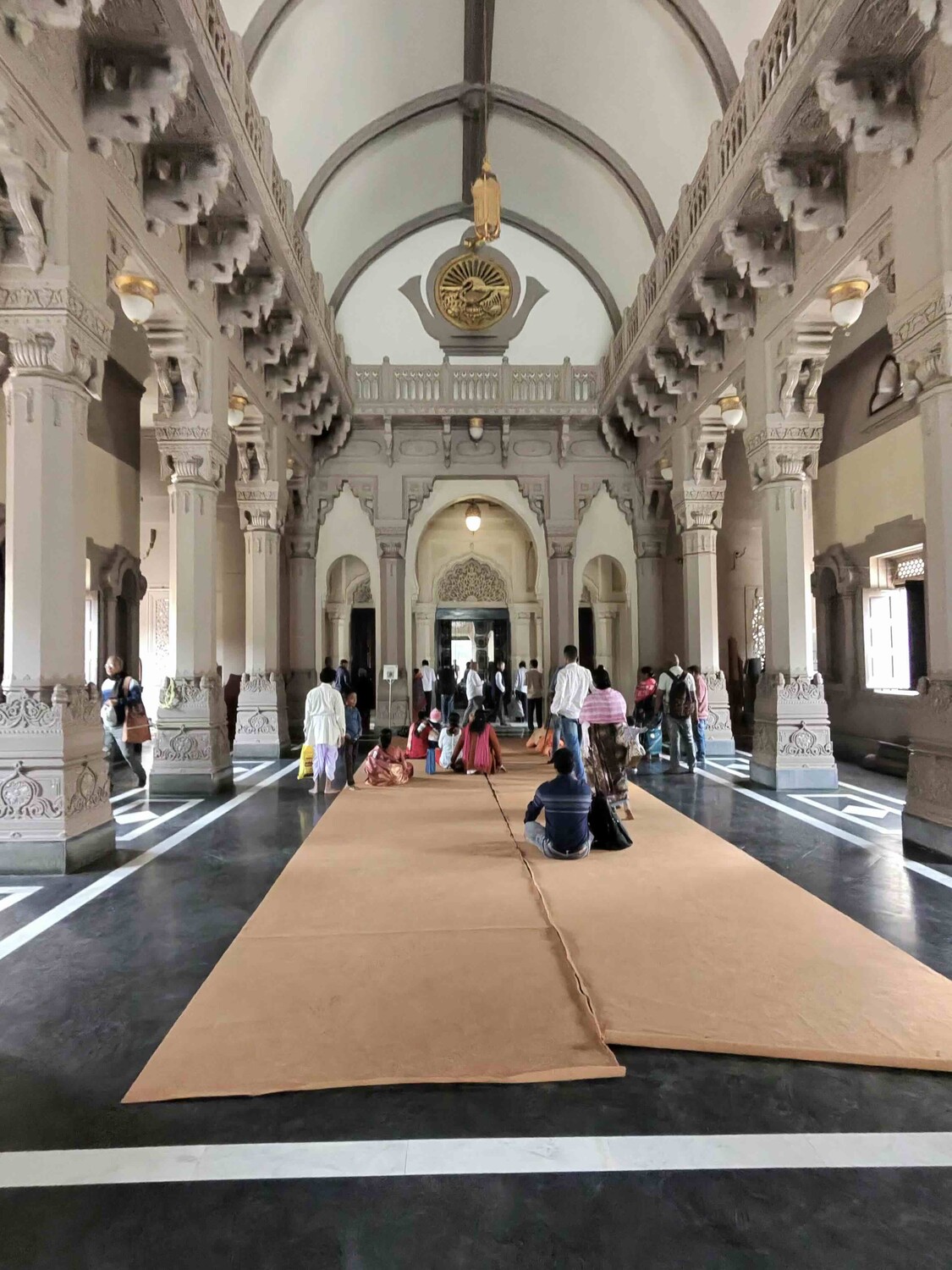
Belur Math—headquarters of the Ramakrishna Math and Ramakrishna Mission—captures this spirit in a quote attributed to Ramakrishna, emphasizing that religions exist to fit different aspirants, and that one can reach God through any path practiced with wholehearted devotion.
In a century increasingly shaped by identity fragmentation, algorithmic outrage, and spiritual tribalism, Ramakrishna’s legacy is not merely “interfaith harmony” as a slogan. It is a direct antidote to the prison of “my way is the only way.”
It is also a profound technology of peace.
Because so much conflict—personal and collective—is born from the need to be right, to be superior, to be separate.
Ramakrishna’s message dissolves the need at the root.
A teacher without books: why his voice still feels alive
Another striking detail: Ramakrishna did not write books or give formal public lectures. His teaching lived in conversation—parables, metaphors, ordinary images drawn from daily life.
Those conversations were recorded by Mahendranath Gupta and published in Bengali as Sri Sri Ramakrishna Kathamrita, later rendered in English as The Gospel of Sri Ramakrishna.
This matters because it reveals the method of his legacy:
- not abstraction, but direct speech
- not ideology, but living contact
- not conversion, but awakening
Ramakrishna’s teaching is experiential. It doesn’t ask, “Do you agree?” It asks, “Will you practice?”
From ecstasy to institutions: how his legacy became service
A mystic’s influence can remain private—beautiful, but confined.
Ramakrishna’s legacy did not stay private.
He trained a circle of young disciples, the foremost being Narendranath Datta—later Swami Vivekananda—who carried the message outward with immense force.
Vivekananda founded the Ramakrishna Mission in 1897, shaping an organization where monks and laypeople work together in “Practical Vedanta” and social service: education, hospitals, relief, rural development, and more.
Belur Math describes the motto of the twin organizations (Ramakrishna Math and Ramakrishna Mission) as:
“For one’s own salvation and for the welfare of the world.”
This is one of the most important bridges Ramakrishna’s lineage offers the modern world:
Spiritual realization is not an escape from humanity. It is a deeper way of belonging to it.
Belur Math also outlines the breadth of its educational, medical, and relief work, describing extensive networks of schools and colleges, hospitals and dispensaries, mobile medical units, and disaster relief initiatives.
So the legacy is not only:
- ecstasy (samadhi, vision, devotion)
but also:
- seva (service)
- education
- care for the vulnerable
- the building of institutions that embody spiritual ethics
This is where the Kolkata chapter connects back to Vietnam in an unexpected way.
Because in Vietnam, I was learning that mindfulness is not neutral—it becomes ethical when it’s real, and it naturally turns outward into compassionate action.
Ramakrishna’s lineage offers the same arc, in a different language:
Love of God becomes love of the world.
Why Ramakrishna matters for Happytalism
In Vietnam, I described Happytalism as more than a development paradigm: a manifesto for a world of freedom, consciousness, and happiness for all—and Fundamental Peace as the integration of those pillars.
Ramakrishna deepens that framework by reminding me:
- Freedom is not only political; it is also freedom from fear, ego, and the need to dominate.
- Consciousness is not only awareness; it is the lived realization that the Divine is not elsewhere.
- Happiness is not only well-being metrics; it is the bliss (ananda) that can emerge when the heart stops resisting Reality.
His legacy also offers a critique that’s vital for any “economy of happiness”:
If we try to build happier systems without transforming the consciousness that runs them, we will reproduce suffering with better branding.
Ramakrishna’s gift is not utopian. It is practical at the deepest level:
Change the heart, and the structures become possible.
And his lineage operationalized that insight through education and service—through a tradition that doesn’t merely speak about universal harmony, but tries to institutionalize it.
From Ramakrishna to Aurobindo: the Bengal current continues
Kolkata holds more than one spiritual river.
If Ramakrishna is the mystic flame, Sri Aurobindo is the evolutionary horizon—a mind and spirit that asked not only for liberation, but for transformation of life itself. (Aurobindo was born in Calcutta—now Kolkata—in 1872.)
What moved me is that this is not a forced connection; Aurobindo explicitly speaks of Ramakrishna and Vivekananda in a way that feels like recognition, not commentary:
“What was Ramakrishna? God manifest in a human being…”
So the lineage, as I feel it in Kolkata, is not a straight line of doctrine. It’s a continuum of awakenings:
- Ramakrishna: realization through love and direct experience
- Vivekananda: universal message + service as worship
- Aurobindo: integral transformation—divine life on earth
This is why Kolkata doesn’t just inspire me aesthetically. It reorganizes my inner map.
It makes the journey feel less like travel and more like initiation.
A Kolkata practice: a bridge from Vietnam’s “beams” to Ramakrishna’s “heart”
In Vietnam, my ritual was breath, steps, and “lighthouse speech.”
Here in Kolkata, I’m experimenting with a complementary ritual—one that honors Ramakrishna’s legacy without trying to imitate his ecstasy.
1) Three breaths to arrive (Vietnam)
- Inhale: I arrive.
- Exhale: I soften.
- Inhale: I am here.
2) One moment of longing (Kolkata) Ask, quietly: What do I truly want—beneath my habits? Not what I want to achieve. What I want to become.
3) One act of “seeing God in a being” (Ramakrishna’s legacy) Choose one person today—someone easy or difficult—and practice this inner sentence: May I meet you beyond my categories.
Not as an idea. As a discipline.
4) One act of service as worship (Ramakrishna Mission ethos) Do something useful, small, unglamorous—without needing credit. Let it be your prayer in action.
This is how the flame becomes a path, not a spectacle.
Closing: the legacy is alive because it is unfinished
Ramakrishna’s legacy is not primarily that he lived an extraordinary life (though he did). It is that he expanded what we believe is possible:
- that the Divine can be known directly
- that religions can be honored without rivalry
- that realization can become service
- that love can be a method of truth
In Vietnam, the lighthouse taught me: peace is every step. In Kolkata, Ramakrishna is teaching me something even more disarming:
Peace is also every surrender.
And perhaps this is the deeper architecture beneath Happytalism—beneath policies, education, and systems:
A human heart that learns to love what is Real… until freedom, consciousness, and happiness are no longer ideals, but the natural fragrance of how we live.
…
Explore this topic
Field notes to your inbox
Stay connected to the shift.
Monthly essays from the Observatory, invitations to Fests and Academy cohorts. Written from abundance — never urgency.