leadership
Conscious Innovation & Quantum Progress: A World Happiness Foundation Position on SDG 9
Introduction Infrastructure and innovation are the backbone of human progress – from roads and bridges connecting communities, to digital networks linking minds across continents. Yet as we stand in 2025, we face a paradox. On one hand, humanity’s technological advances are accelerating at an expone
August 21, 2025·Luis Miguel Gallardo·25 min read
AI insights
Introduction
Infrastructure and innovation are the backbone of human progress – from roads and bridges connecting communities, to digital networks linking minds across continents. Yet as we stand in 2025, we face a paradox. On one hand, humanity’s technological advances are accelerating at an exponential pace, opening possibilities for quantum leaps in development. On the other hand, billions remain excluded from basic infrastructure and digital connectivity, and our industrial growth often strains the planet’s health. Sustainable Development Goal 9 (Industry, Innovation and Infrastructure) was established to “build resilient infrastructure, promote inclusive and sustainable industrialization and foster innovation.” The World Happiness Foundation fully embraces this goal – and proposes an expanded vision we call Conscious Innovation & Quantum Progress. This is a vision of development guided by higher purpose and conscious intent to benefit all life, human and beyond. It aligns with our ethos of non-violence, fundamental peace, and rising consciousness, and it reframes innovation not as an end in itself but as a means to uplift humanity’s well-being in harmony with nature. In alignment with the United Nations and global partners, and as part of our mission to realize “10 billion free, conscious and happy people by 2050,” we present this position paper ahead of the 2025 World Happiness Summit. We invite governments, businesses, innovators, and citizens everywhere to join us in embracing Happytalism – a new paradigm that views technology and infrastructure through the lens of abundance, compassion, and shared prosperity. Together, we can ensure that the engines of progress run on conscious fuel, driving us toward a future where innovation serves everyone and leaves no one (and no ecosystem) behind.
Beyond Scarcity: Embracing an Abundance Mindset in Innovation
For much of modern history, innovation and industrial growth have been pursued through a lens of competition and scarcity. Nations and companies often treat technology as a zero-sum race – a scramble for patents, markets, and resources – rooted in the belief that advancement for some must come at the expense of others. Traditional measures of progress focus on what is lacking: bridging the “digital divide,” filling infrastructure “gaps,” catching up in the “technology race.” While recognizing deficits is important, this scarcity mindset can inadvertently breed fear and short-term thinking. When people believe resources and opportunities are finite, they may hoard knowledge or guard innovations, fearing that someone else’s gain is their loss. This outlook has tangible consequences: essential technologies remain inaccessible to many, and promising solutions go underutilized. For example, life-changing digital tools still haven’t reached one-third of humanity – about 2.6 billion people remain offline as of 2023 – in part because past approaches treated connectivity as a privilege or commercial commodity rather than a universal right. Similarly, roughly one in eight people worldwide live more than 2 km from an all-season road, a reminder that old paradigms left huge swaths of our global family without the infrastructure to access education, healthcare, and markets.
An abundance mindset flips this narrative. It starts from trust: the belief that human creativity and cooperation can generate more than enough opportunity and resources for everyone. In the context of SDG 9, this means recognizing that innovation is not a pie to be sliced up, but a flame that can ignite countless others without dimming its own light. Knowledge shared only grows. When we operate from abundance, when others succeed, we all succeed – technological prosperity is not zero-sum. This mindset encourages long-term, collaborative solutions over short, defensive gains. Instead of asking “Where can we cut costs or outcompete rivals?”, we ask “How can we unlock technology’s benefits for as many people as possible?”. An abundance approach to connectivity, for instance, wouldn’t accept 2.6 billion offline as an inevitability, but rather see it as proof that we have vast room to extend the gift of information and connection. It would drive bold initiatives to bring meaningful access to every community – like the ITU and UNICEF’s Giga project to connect every school by 2030, a mission that recognizes digital knowledge as a common good. Abundance thinking also reframes infrastructure development: instead of viewing modern infrastructure as exceedingly costly and scarce, we acknowledge that today’s technology and wealth (the world’s economy tops $100 trillion) are more than sufficient to provide clean water, energy, transport, and internet for all – if deployed with inclusive intent. As World Happiness Foundation founder Luis Miguel Gallardo observes, “a scarcity mindset creates limitations, whereas an abundance mindset allows us to think big and set bold goals.” Embracing this outlook in innovation unleashes us to imagine quantum leaps: e.g. eradicating information poverty entirely, or leapfrogging carbon-intensive infrastructure straight to green and digital systems for everyone. The next frontier in global progress is not about rationing innovation, but about democratizing it. By replacing fear with trust and rivalry with synergy, we can transform innovation into a positive-sum endeavor where open knowledge, shared technology, and mutual empowerment become the norm. In an abundant world, the question isn’t whether we have enough ingenuity and resources to meet our needs – it’s whether we have the will to deploy them for the common good.
Happytalism: Reimagining Infrastructure and Technology for Well-Being
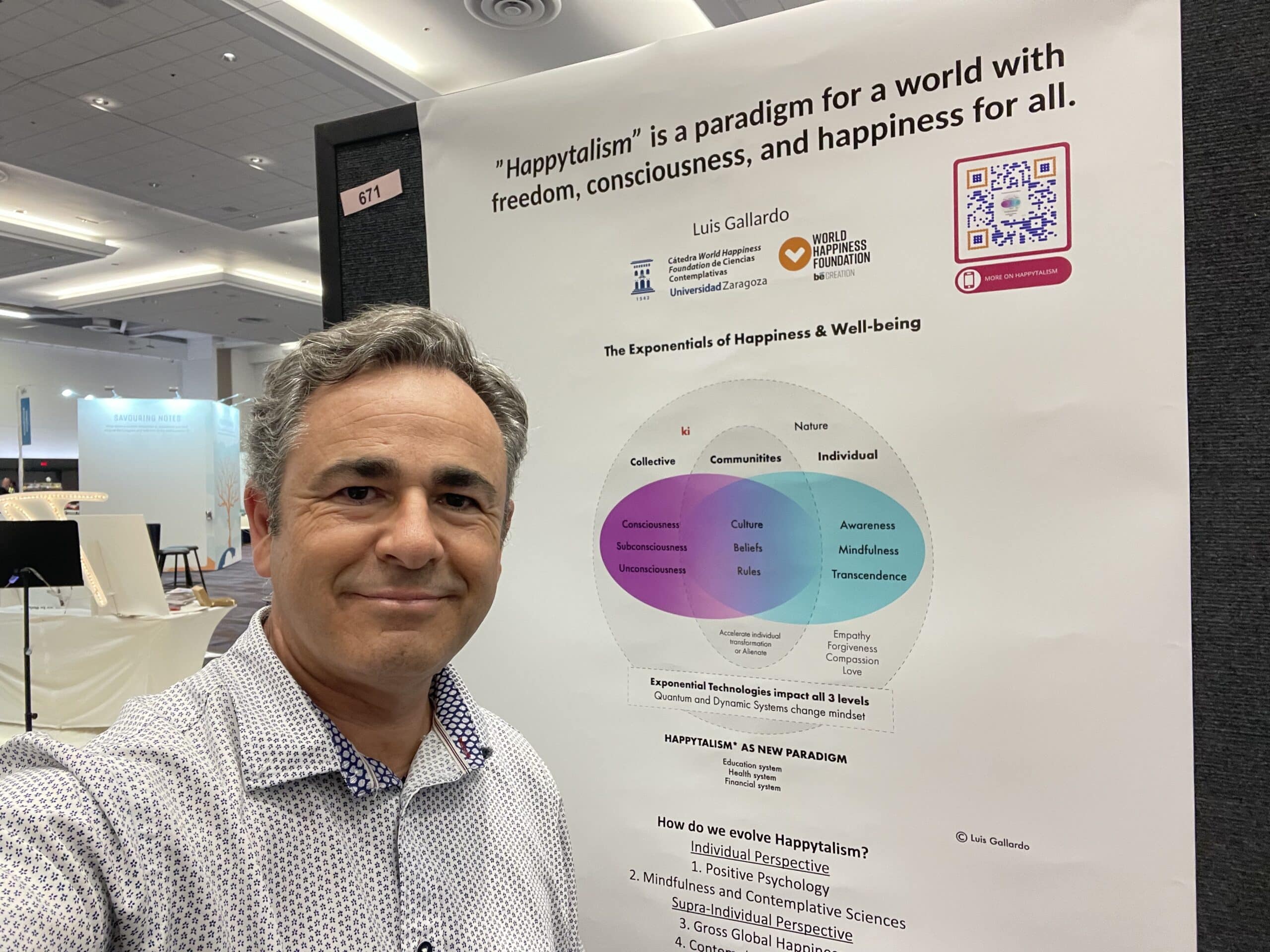
Happytalism is the World Happiness Foundation’s proposed paradigm shift from scarcity to abundance, and it offers a fresh framework for SDG 9. At its heart, Happytalism redefines what progress means. In contrast to the old paradigm that measured success in purely economic or industrial terms (GDP growth, number of factories, tech market share), Happytalism measures success by the well-being, freedom, and happiness of people and planet. This human-centered lens asks of every innovation and infrastructure project: Does this increase freedom, consciousness, and happiness for all? If not, then no matter how “advanced” it appears, it falls short as true progress. Applying this to SDG 9, we move from a goal of “Industry, Innovation and Infrastructure” in the abstract to “Conscious Innovation & Quantum Progress” in practice – meaning innovation guided by awareness and compassion, aiming for quantum-level improvements in quality of life. Where the original SDG 9 emphasizes what to build (infrastructure, industrialization, etc.), our reframed Goal 9 emphasizes how and why we build: we develop technology consciously, with intent to benefit all life, and we embrace quantum thinking – holistic, interconnected, exponential – to solve challenges at scale.
In practical terms, a Happytalist approach to innovation would prioritize technologies that directly enhance well-being and unity. For example, instead of celebrating any and all industrial growth, we champion meaningful industrialization that creates dignified jobs, empowers communities, and respects nature’s limits. We promote an economy of quality and purpose over quantity. This echoes the concept of a Well-Being Economy emerging in countries like New Zealand, Scotland, and Bhutan – economies that measure prosperity in terms of health, education, and happiness rather than just output. In a Happytalist future, a new highway or fiber-optic network isn’t deemed successful unless it demonstrably improves people’s lives – connecting underserved populations, enabling education and healthcare access, and fostering community (not just commerce). Technology policy shifts accordingly: broadband connectivity might be treated as a basic public utility, and digital innovation encouraged in open, inclusive ecosystems rather than behind walled gardens. Notably, this paradigm aligns with the spirit of the UN’s goals but also expands beyond them. Where SDG 9 speaks of fostering innovation and access to infrastructure, Happytalism adds the dimension of consciousness – ensuring those innovations elevate our collective spirit and wisdom. It also adds purpose: we innovate not for innovation’s sake, but to end suffering and enhance joy. For instance, rather than simply aiming to increase the number of researchers or patents (an SDG 9 indicator), we ask how research can be directed to maximize societal happiness – be it cures for diseases, green technologies, or tools for mental well-being.
Crucially, Happytalism calls for quantum progress – a term that reflects both the magnitude and the nature of change we seek. “Quantum” implies transformative leaps (as opposed to linear, incremental steps) and also hints at the interconnectedness of all things at a fundamental level. Indeed, even modern physics suggests that at the smallest scales, separation is an illusion: everything in the universe is part of one field, deeply interconnected. By quantum progress, we mean innovation that harnesses this interconnected reality – solutions that address multiple needs at once and recognize the unity of humanity and nature. Imagine, for example, technologies that simultaneously provide clean energy, create local jobs, and reduce greenhouse emissions – a solar microgrid program in a rural region can do all of these. Or consider digital platforms designed to enhance social cohesion and knowledge-sharing rather than exploit division – these too advance multiple aspects of well-being together. The emerging field of quantum technology itself offers an illustration: quantum computing and sensing could revolutionize medicine, climate modeling, and materials science, yielding breakthroughs that help fulfil several SDGs at once. But as global experts note, realizing this promise requires conscious cooperation: “Preparing the global community for the inclusive adoption of quantum technology, ensuring broad access, disseminating knowledge and promoting multilateral cooperation will be pivotal in advancing the sustainability and social agenda.” In other words, only if we guide these powerful innovations with conscious intent – focusing on inclusion and global good – will they truly deliver quantum leaps for humanity. Happytalism provides that guiding intent by making well-being for all life the north star of innovation. Under this paradigm, we intentionally direct the world’s vast innovative capacity (which is growing – global R&D spending rose nearly 15% from 2014–2018, outpacing economic growth) towards solving humanity’s greatest challenges and uplifting every community. We also recognize that innovation capacity itself must be democratized: today, only 37 countries invest even 1% of GDP in research, and much of the world’s innovation investment is concentrated in a few economies. Happytalism urges us to spread research and tech investment to the many, not just the few, so that innovation arises from diverse cultures and addresses diverse needs. In summary, Happytalism reframes SDG 9’s what into a how/why: we build and innovate not just to grow economies, but to grow human happiness and planetary harmony. Progress is redefined as that which yields Fundamental Peace – a state where freedom, consciousness and happiness prevail – and technology and infrastructure are seen as tools to help achieve that higher end.
Ethical Innovation and Planetary Stewardship (Non-Violence in Tech)
Our vision for infrastructure and technology is inseparable from the principle of non-violence – extending the ethos of “do no harm” into the realm of innovation. In the World Happiness Foundation’s view, violence is not only the overt aggression we see in wars or conflicts, but also the subtle, structural harm caused when systems inflict suffering or injustice. Traditionally, industrialization and technological expansion have been double-edged swords: they brought tremendous benefits, but also pollution, exploitation, and inequality. Factories that spew toxins into the air and water, digital platforms that amplify hate or infringe privacy, or supply chains that rely on sweatshops – these are forms of violence in that they harm lives and dignity, albeit indirectly. As we pursue SDG 9, it is vital that innovation never comes at the expense of our humanity or our planet. In a world of abundance, there is no justification for progress that leaves a trail of destruction. As Mahatma Gandhi said, “peace is not only the absence of violence, it is the presence of justice” – we interpret this to mean that true technological progress must actively promote justice and well-being, not merely avoid catastrophe.
Practically, conscious innovation demands robust ethical guardrails and a regenerative mindset. We advocate for what might be called planetary stewardship in industry – ensuring that new infrastructure is sustainable and that industrialization is clean and circular. This means integrating renewable energy, energy efficiency, and low-carbon materials into every project. The good news is that technology is on our side here: renewable energy is now booming at exponential rates, outpacing fossil fuel growth. In 2023 alone, the world added 50% more renewable power capacity than the year before, with solar PV accounting for three-quarters of new installations. The International Energy Agency projects that under current trends, global renewable capacity will more than double by 2028, putting us on course (though not yet fully) to triple capacity by 2030 as called for in climate goals. These trends prove that if we choose, we can power our civilization sustainably – an abundant supply of clean energy is within reach. Yet a conscious, ethical approach is needed to ensure these green innovations are shared widely. Today, a lack of financing in developing countries means clean tech deployment is uneven, with many poorer regions “being left behind in the new energy economy”. This inequity is unacceptable through our lens of justice. We call for increased support, technology transfer, and impact investment to spread climate-smart infrastructure (from solar microgrids to electric transport) to all nations. In essence, every new highway, power plant, or factory should be aligned with climate stability and ecological respect. Infrastructure development must heal and protect, not hurt: for example, building climate-resilient roads that can withstand floods, or designing cities with green spaces that improve mental health and biodiversity (tying into SDG 11 on sustainable communities).
Equally important is the ethical governance of digital and scientific innovation. Humanity now wields technologies more powerful than ever – artificial intelligence, biotech gene editing, surveillance tools, and soon quantum computing – which can profoundly impact societies. If guided by a fear-based, profit-at-all-costs mindset, these could deepen inequalities or even threaten freedoms. But guided by wisdom and compassion, they could solve problems once thought unsolvable. Conscious Innovation insists that we imbue our tech revolution with a moral revolution. This includes establishing strong norms and policies (through international cooperation) to ensure technology respects human rights, autonomy, and diversity. It also means proactively using tech to promote peace and understanding. For instance, AI and big data can be used to improve public services, predict and prevent pandemics, or facilitate education for all – but we must ensure algorithms are fair and inclusive (avoiding biases that marginalize groups). We applaud efforts like UNESCO’s Recommendation on the Ethics of AI and the UN’s push for a Global Digital Compact which aims to achieve a “safe and sustainable digital future for all.” Embracing non-violence in tech further implies protecting the most vulnerable from any negative side-effects of innovation. As we modernize industries, workers must be treated with dignity and helped to adapt (through re-skilling and social safety nets) rather than cast aside. As we roll out digital services, we must safeguard data privacy and mental well-being (for example, countering online harms such as cyberbullying or disinformation). In short, the World Happiness Foundation advocates that every act of building or innovating undergo a simple ethical test: Does this cause harm or does it heal? If an infrastructure project uproots communities without their consent, it violates this principle. If a new app exploits users’ anxieties for profit, it fails the test. In a Happytalist world, technology serves life, not the other way around. By rigorously applying non-violence and justice to our innovation agenda, we ensure that the “progress” we create is one that liberates and elevates everyone – fulfilling SDG 9 in letter and spirit, without sowing the seeds of new conflicts or suffering.
Rising Consciousness in Science and Technology Education
Achieving Conscious Innovation and equitable progress is not just a technical task; it is deeply a human one. This is why a cornerstone of our approach is elevating human consciousness alongside expanding infrastructure. External solutions – new roads, broadband cables, research labs – will not reach their transformative potential unless they are coupled with inner development: mindsets of empathy, responsibility, and creativity in the people who design, implement, and use these solutions. We need to nurture a generation of innovators, engineers, scientists, and citizens who view technology through the lens of interdependence and compassion. In education systems around the world, this calls for a blending of STEM with values and socio-emotional learning. Just as we teach coding and engineering, we must also teach ethics, mindfulness, and global citizenship. The World Happiness Foundation has been active in fostering such holistic education. Through initiatives like the “Teachers of Happiness” program, we’ve helped train over 45,000 teachers across Latin America, Europe, and Asia to become conscious catalysts of well-being in their schools. These educators learn to integrate mindfulness, emotional intelligence, and compassion into their curricula, creating “Schools of Happiness” where students cultivate not only knowledge but also character and purpose. This movement, originally aimed at general well-being, is equally applicable to the domain of innovation: imagine science classes where collaboration is valued over competition, or engineering programs where students take oaths akin to the medical Hippocratic oath to “first, do no harm” with their creations.
By infusing education with an abundance mindset and ethical consciousness, we break the cycle of scarcity thinking at its root. Young people trained in this way learn to see technology not as a means to gain dominance or mere profit, but as a toolbox to serve community needs and express creativity for good. They develop resilience and entrepreneurial empathy – the capacity to understand societal problems deeply and innovate solutions collaboratively, rather than in isolation. We have already seen promising examples: in under-resourced schools where well-being practices were introduced, students became more engaged and started tech clubs focused on solving local issues, like creating low-cost water filters or community wifi hubs. When learners experience the joy of using knowledge to help others, they become lifelong innovators for social good. Moreover, education that emphasizes interdependence helps produce scientists and policymakers who naturally gravitate towards open science and knowledge-sharing. This is critical for SDG 9, because global challenges like climate change or pandemic disease can only be solved by collective innovation efforts, not siloed research. A conscious scientist is more likely to collaborate across borders and disciplines, recognizing that no nation can progress alone. This spirit echoes the ROUSER leadership model we champion (Regenerative, Open, United, Systems-oriented, Empathetic, Resilient) – qualities we believe every innovator and leader should embody. Indeed, raising consciousness is not a “soft” add-on to the innovation agenda; it is a powerful multiplier that ensures our technological advancements are humane and inclusive by design. It means the next generation of inventors will be as excited about closing equity gaps as they are about coding apps, and future infrastructure planners will measure success in human terms (lives improved) as much as in engineering terms.
The World Happiness Foundation also supports empowerment initiatives that bring underrepresented voices into the innovation process. Conscious innovation requires diversity of thought and experience. Today, women and girls, minorities, and those from low-income communities are still underrepresented in STEM fields globally – a loss of potential that an abundance approach cannot accept. Therefore, we back programs that encourage girls in tech, indigenous innovation labs, and rural maker spaces. When a young girl in an African village gains internet access and coding skills, she not only improves her own prospects but often creates solutions attuned to her community’s needs (say, a mobile app for local farmers) – solutions a distant tech hub might overlook. We envision a future where every child is a creator, not just a consumer, of innovation. By spreading digital literacy and creativity with an ethos of compassion, we equip communities everywhere to solve their own problems and share those solutions globally. This grassroots empowerment is the bedrock of sustainable infrastructure development: communities that are conscious and capable will build and maintain their infrastructure in tune with their values. In sum, cultivating inner development in parallel with outer development ensures that innovation is not just about shiny new tools, but about enlightened people using those tools wisely. It is how we foster the R&D of happiness and the engineering of peace.
Multi-Stakeholder Ecosystems for Equitable Progress
Conscious Innovation & Quantum Progress cannot be achieved by any single actor; it requires an ecosystem approach, where governments, industry, civil society, and international organizations each contribute their strengths in a coordinated way. The scale and complexity of today’s challenges – from bridging the digital divide to decarbonizing infrastructure – demand unprecedented collaboration. The World Happiness Foundation has long advocated multi-stakeholder partnerships as a means to unlock abundance where isolated efforts see scarcity. In the context of SDG 9, this means creating alliances that leverage public policy support, private sector innovation, community knowledge, and global funding all at once to drive infrastructure and tech solutions. A shining example is the aforementioned Giga initiative (ITU and UNICEF), which brings together UN agencies, governments, and tech companies to finance and provide internet to schools worldwide. By combining political will, on-the-ground execution, and innovative financing (including cryptocurrency and crowdfunding for schools), Giga has already connected over 2 million students and is scaling up. Such models illustrate how partnership turns the ideal of universal connectivity into a practical, achievable project. Another example is how various stakeholders are uniting to promote clean energy access: governments setting targets and policies (over 140 countries now have renewable energy targets), businesses developing affordable clean tech, multilateral banks and funds (like the Green Climate Fund) providing capital, and NGOs working with communities to implement and maintain local solutions. The result is that even in remote islands and villages, solar mini-grids and battery storage are coming online, often through creative partnerships rather than top-down development alone.
The World Happiness Foundation itself practices this collaborative ethos. We work with city councils to design “Cities of Happiness” where urban infrastructure is planned with citizen input and well-being metrics; we partner with social enterprises (as in the “Threads of Happiness” project with Jaipur Rugs in India) to blend economic empowerment with infrastructure development; we consult with UN agencies and forums to inject happiness and consciousness perspectives into global development agendas. These experiences confirm a key lesson: when diverse stakeholders unite around a common vision, the capacity for innovation multiplies. In Jaipur, for instance, what began as a partnership to improve artisans’ livelihoods evolved into a community-wide infrastructure effort – including setting up education centers, digital training hubs, and wellness spaces in villages. By engaging local government, academia, and international supporters, the project scaled its impact to reach thousands of families, illustrating how an ecosystem can generate self-sustaining progress. We see similar dynamics in tech and infrastructure globally: open-source technology communities create ecosystems where volunteers, companies, and users co-create solutions (Linux, for example, powers much of the world’s servers through such collaboration). In sustainable transport (a key aspect of SDG 9), some cities have formed coalitions with bike-share companies, public transit authorities, and citizen groups to develop integrated, green mobility networks – each party contributing pieces of the puzzle, from funding to innovation to local knowledge.
A multi-stakeholder approach is also essential for equitable sharing of advances, as our Goal 9 framing emphasizes. If left to market forces alone, cutting-edge innovations often stay concentrated with the few who can afford them or who developed them. But through partnership, we can spread these benefits. Consider the global response during the COVID-19 pandemic: while initially vaccine technology was monopolized, international and multilateral efforts (COVAX, tech transfer initiatives) sought to distribute doses and know-how more widely – a mixed success, but a learning experience for how vital cooperation is to avoid “innovation apartheid.” The spirit of global unity (echoing SDG 17) underpins Conscious Innovation. We support calls for treating certain technologies – like vaccines, green tech, or internet connectivity – as public goods where appropriate, meaning their benefits should be available to all, not just to those with purchasing power. International institutions have a big role here: they can broker agreements for technology transfer, establish norms for open access (as seen in the Open COVID Pledge for intellectual property, or the WHO’s mRNA vaccine hub), and invest in capacity-building in less developed countries. Likewise, the private sector must come to the table with a sense of social responsibility, recognizing that including more people in the innovation ecosystem ultimately enlarges the market and benefits everyone. When a telecom company partners in a public initiative to reach rural users, it is not charity – it is seeding future customers and innovators. When a tech firm open-sources a critical software tool, it can spur unexpected breakthroughs by developers worldwide, which the originator can also learn from. In an abundance mindset, sharing know-how is win-win: empowerment of others does not diminish one’s own power, it expands the pie of collective capabilities.
Therefore, the World Happiness Foundation strongly advocates for Platforms of Collaboration on all fronts of SDG 9. We encourage governments to create regulatory sandboxes that invite startups and community organizations to pilot new infrastructure solutions (e.g. community-run ISPs or microgrid experiments) with institutional backing. We urge international bodies to treat digital and innovation access as a cornerstone of development – much like basic education or health – and to mobilize funds accordingly. We champion the idea of happiness-centered design councils where engineers work alongside psychologists, ecologists, and local citizens to plan projects that maximize holistic well-being. By weaving together diverse perspectives, these ecosystems ensure that progress isn’t defined by one metric alone, but by a tapestry of outcomes: economic opportunity, social cohesion, cultural respect, and ecological balance. And importantly, when each stakeholder adopts the abundance mindset, they act not as competitors guarding turf, but as allies reinforcing each other. Governments provide open data that entrepreneurs can use; companies mentor and fund local innovators; communities take ownership of projects to maintain them; researchers freely exchange findings across borders. This synergy is exactly what’s needed to meet ambitious targets like universal meaningful connectivity by 2030 (which current trends show we’ll only reach with much faster action) or to upgrade and decarbonize infrastructure in all developing countries. The challenges are great, but the collective resources and knowledge of humanity are far greater – especially when united by a shared vision of global well-being.
Conclusion: Toward an Era of Quantum Progress and Shared Prosperity
As we look ahead to the pivotal years approaching 2030 and beyond, the World Happiness Foundation’s message on SDG 9 is one of profound hope and commitment. We stand at a crossroads where we can choose to perpetuate old paradigms of scarce thinking – risking a future of tech oligopolies, widening digital gulfs, and unsustainable industries – or we can boldly embrace a new paradigm of Conscious Innovation fueled by abundance, love, and wisdom. Our Happytalist perspective urges the world to choose the latter: to go beyond simply treating connectivity gaps and infrastructure deficits as technical problems, and instead to envision prosperity and progress as a human right for everyone. This is a call to reorient innovation as a tool of liberation – to ensure that a child in a remote village has the same chance to learn and dream through technology as a child in any wealthy city, that clean lights shine in every home without harming the planet, and that every community can leverage modern know-how to solve its challenges without sacrificing its values or well-being. We believe that eradicating the poverty of access – whether to information, energy, transport, or opportunity – is both possible and necessary in our lifetime. In the story of human progress, it’s time to turn the page from an era of survival and competition to an era of thriving and cooperation. A world where innovation is abundant and shared is not a utopian fantasy; it is an achievable reality if we align our will and imagination to make it so.
Realizing this future will require courage, collaboration, and a profound shift in mindset at all levels. We must summon the courage to question entrenched models – to ask, for example, why billions are spent on arms and trivial consumer tech while basic connectivity and electricity for all remain underfunded – and to redirect our immense resources toward what truly matters for humanity’s flourishing. We must also craft innovative policies and metrics that reflect our new priorities: governments might adopt budgeting that gives weight to happiness and sustainability outcomes, businesses might be incentivized not just by profit but by social impact (with, say, tax credits for sharing intellectual property or for employee well-being programs). The concept of Gross Global Happiness could guide international cooperation, measuring progress by how much we reduce suffering and increase thriving worldwide. Furthermore, each of us as individuals and leaders has a role in this transformation. We are called to cultivate an abundance mindset in daily life – celebrating others’ breakthroughs, sharing knowledge freely, and trusting that by lifting others up we all rise. The Foundation’s mantra of becoming “Rousers – conscious catalysts of well-being” – applies here: we need rousers in labs, in boardrooms, in government offices, and in neighborhoods, all advocating and acting for technology that heals, not harms.
There is also a deep spiritual element to this journey. By embracing quantum progress, we implicitly acknowledge the interconnectedness of all beings. This higher consciousness recognizes that when a remote community gains internet access, the whole world benefits from their voices and talents coming online; when a forest is preserved by smarter infrastructure planning, the climate stability for all improves; when even one person escapes the darkness of isolation through innovation, our collective human family becomes more enlightened. In such a state of awareness, allowing anyone to languish without access to the tools of modern life is as unacceptable as ignoring a family member in need. It is this unity of purpose that will drive us to finish the work of SDG 9 in a way that’s truly inclusive. We won’t be content with half measures or progress for some – quantum progress means we strive for breakthroughs that can uplift everyone, and we replicate successes rapidly across the globe. The accelerating advances in technology give us reason for optimism: we have more capability than ever to solve problems at scale. Let us marry that capability with the moral clarity of Happytalism, ensuring that innovation is guided by an unwavering commitment to compassion and equity.
The World Happiness Foundation reaffirms its commitment to be a convener and catalyst in this collective mission. Through our initiatives like #TenBillionHappy by 2050, our partnerships with UN agencies and grassroots innovators, and our public campaigns, we will continue to champion the ideas and actions that make Goal 9’s vision a reality. We invite all stakeholders – engineers, entrepreneurs, policymakers, educators, and community leaders – to join us in this movement of Conscious Innovation. Let’s pool our wisdom and resources to build a world where technology and infrastructure are not cold monuments to progress, but living bridges that connect hearts and open doors for all. Let’s ensure that the digital age becomes an age of inclusion and enlightenment, the industrial capabilities become engines of environmental regeneration, and the quantum leaps in knowledge lead to quantum leaps in compassion. In doing so, we herald a new era of shared prosperity – an era in which every person not only has the material means to live decently, but the opportunity to live joyfully, creatively, and freely. This is the essence of Happytalism in action for SDG 9: a world where innovation is abundant and kind, progress is hyper-fast yet mindful, and the fruits of human genius nourish all members of our global family and the planet we call home.
Sources:
World Happiness Foundation – Beyond Scarcity (Happytalism blog) (reframing SDG8: Gross Global Happiness as a new metric replacing endless GDP growth, emphasizing well-being economy which informs innovation goals) https://worldhappiness.foundation/blog/consciousness/beyond-scarcity-embracing-happytalism-for-a-world-of-abundance/
World Happiness Foundation – Beyond Scarcity: Embracing Happytalism for a World of Abundance (Happytalist reframing of SDGs, Goal 9 definition) https://worldhappiness.foundation/blog/consciousness/beyond-scarcity-embracing-happytalism-for-a-world-of-abundance/
World Happiness Foundation – Eradicating Poverty through Abundance and Happytalism (quote on scarcity vs abundance mindset by Luis Miguel Gallardo) https://worldhappiness.foundation/blog/community/eradicating-poverty-through-abundance-and-happytalism-a-world-happiness-foundation-perspective/
ITU – Population of global offline continues steady decline to 2.6 billion in 2023 (one-third of humanity offline; 67% online) https://www.itu.int/en/mediacentre/Pages/PR-2023-09-12-universal-and-meaningful-connectivity-by-2030.aspx#:~:text=The%20reduction%20from%20the%20estimated,global%20population%20unconnected%20in%202023
World Bank – SDG9 Atlas 2023 (roughly 1 billion people lack access to an all-season road globally, highlighting infrastructure gap) https://datatopics.worldbank.org/sdgatlas/goal-9-industry-innovation-and-infrastructure/#:~:text=,emissions%20per%20person%20in%202020
ITU/UNICEF – Giga “Facts and Figures 2024” press release (digital divide: 93% internet use in high-income vs 27% in low-income; only 4% in low-income have 5G vs 84% in high-income; recognition of Giga in Global Digital Compact) https://giga.global/global-digital-development-what-the-stats-say/#:~:text=Noting%20that%20the%20underlying%20technology,cent%20rely%20exclusively%20on%203G
World Economic Forum – Quantum for SDGs (2024) (need for inclusive adoption of quantum tech through broad access and cooperation to advance sustainability) https://www.weforum.org/publications/quantum-for-society-fulfilling-the-promise-of-the-sdgs/#:~:text=Preparing%20the%20global%20community%20for,the%20sustainability%20and%20social%20agenda
UNESCO Science Report 2021 (SDG 9) – (global R&D spending grew ~14.8% 2014–2018, faster than GDP; only 37 countries spend ≥1% GDP on R&D, indicating concentration) https://www.unesco.org/reports/science/2021/sites/default/files/medias/fichiers/2022/04/Factsheet%20USR21%20SDG%209.pdf#:~:text=purchasing%20power%20parity%20dollars%3B%20from,Trends%20in%20research%20input
IEA/WEF – Renewables 2023 Report highlights (50% more renewable capacity added in 2023 vs 2022; calls to triple capacity by 2030; challenge of unequal clean energy distribution to developing economies) https://www.weforum.org/stories/2024/02/renewables-energy-capacity-demand-growth/#:~:text=energy%20in%20the%20next%20five,years
IEA/WEF – Renewables projections (renewable generation expected to surpass coal by 2025 and double by 2028, on track for 2.5× increase by 2030 under current policies, highlighting progress and remaining gap to goals) https://www.weforum.org/stories/2024/02/renewables-energy-capacity-demand-growth/#:~:text=tripling%20renewables%2C%20but%20we%E2%80%99re%20moving,IEA%20Executive%20Director%20Fatih%20Birol
World Happiness Foundation – Eradicating Poverty… (commitment to #TenBillionHappy by 2050 and partnerships with UN, aligning happiness with SDGs) https://worldhappiness.foundation/blog/community/eradicating-poverty-through-abundance-and-happytalism-a-world-happiness-foundation-perspective/
Luis Miguel Gallardo – Beyond Scarcity (Happytalism blog) (quantum physics insight that everything is interconnected as one energy field, supporting mindset of unity in innovation) https://worldhappiness.foundation/blog/consciousness/beyond-scarcity-embracing-happytalism-for-a-world-of-abundance/
World Happiness Foundation – Eradicating Poverty… (defining structural violence and quoting Gandhi on true peace being presence of justice, analogous to ethical innovation causing no harm) https://worldhappiness.foundation/blog/community/eradicating-poverty-through-abundance-and-happytalism-a-world-happiness-foundation-perspective/
…
Explore this topic
Field notes to your inbox
Stay connected to the shift.
Monthly essays from the Observatory, invitations to Fests and Academy cohorts. Written from abundance — never urgency.